Blog

  • Why Dark Manicures Should Be Worn in the Summer

    Why Dark Manicures Should Be Worn in the Summer

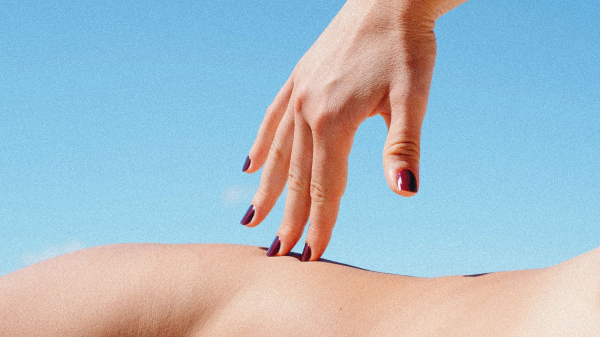
    dark red manicure against blue skyPhoto: StocksySave StorySave this storySave StorySave this story

    I’ve been seeing the same nail tech since 2024, and she and I have a few mutual understandings: We keep the chatting to a minimum, know an almond-oval hybrid shape looks best on my hands, and cash tip over Venmo. But the most important and sacred bond we share is knowing that OPI’s Lincoln Park After Dark is a perfect—maybe the perfect—manicure shade. “That’s my favorite,” she told me when I requested it at our very first appointment two years ago. We’ve been together ever since.

    Unfortunately for my nailbeds, she’s been away visiting family this month, so I had to book an appointment with a different tech last week—one I’ve never seen before. As I settled into my chair and requested she sand off the bright red from my gel manicure and replace it with the inky purple shade, she almost fell out of her seat. “That’s a winter color,” she said, eyes wide, mouth agape, like I just asked her to stab me with her file. “Are you sure?”

    And reader, I was sure. Launched in 2005, Lincoln Park After Dark is one of OPI’s most iconic colors, a word I don’t throw around lightly. It’s been a staple in my beauty drawer since I was a teenager, when my nails were bitten and ragged from after school field hockey practices. When it chipped away enough to reveal my naked nail, I’d layer on coats of the dark purple stuff without fully removing what was below it. Now, was this a good idea? Probably not. But I’ll give my 15-year-old self a pass.

    As an adult who now has a standing bi-weekly appointment and no longer plays any kind of organized sport, my nails are in far better shape and the shade continues to be a constant in my life, outlasting many friendships and relationships. I wore it for my first day of work at Allure and am wearing it right now as I type this (the nail tech did indeed end up honoring my request) smack dab in the middle of July, experiencing what can only be described as a truly grotesque heat wave.

    Magazines and other media—even Allure—have long reported that the shades of color we don should change with the seasons: In warmer months, we switch from dark denim to white linen, tap on pastel blushes, and add in strips of glowy highlights to our hair. Usually, nail colors follow suit: The rules of society tell us that bright, shimmery hues are meant to be swapped in once the temperatures rise above 65 degrees, so nails often switch from navy to sky blue, burgundy to cherry red, and moss green to matcha.

    Maybe it’s my Aquarius rising, but I don’t love rules. Rejecting how things are supposed to be and adding my own twist is very much my preferred method of operation. So instead of abandoning my moody manicures, I tend to double down—deep shades tickle something in my psyche that a pale neutral could never. I won’t restrict myself to status quo aesthetic choices when my heart is telling me to please, please, choose the dark midnight option that borders on goth.

    It’s not just because I have faint sprinklings of an individuality complex, though—I’ve long been attached to the idea that dark manicures are the most flattering: Lighter shades seem to disappear into my pale-pinkish skin, causing my fingers to look corpse-like and dull. But a deep shadowy shade, like Essie’s Caviar Bar or Olive & June’s It’s Actually Dark Green, offers high-contrast to my hands in a way that deeply soothes my soul. While I do admittedly experiment with milky whites and vivid reds in the summer months, I still tend to go back-and-forth between something new and my tried-and-true.

    Of course, if you want to continue wearing a punchy orange or a hot pink on your fingers this summer, be my guest. If you never want a dark color to come close to touching your tips, great! That’s the beauty of beauty, after all—it’s subjective, it’s individual, and the only person that has to constantly look down at your hands is yourself.

  • Earth Harbor Obscura Night Repair Concentrate Review

    Earth Harbor Obscura Night Repair Concentrate Review

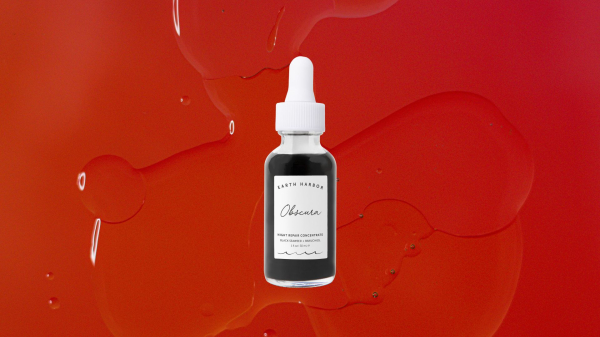
    Image may contain Bottle Ink Bottle Cosmetics and Perfume$38 at Earth HarborSave StorySave this storySave StorySave this story

    TL;DR:

    • What it is: A gentler, overnight skin repair serum
    • What it does: Replenishes and revives skin while you sleep
    • Who it’s for: Anyone who wants retinol-like benefits without nightly retinol

    Not every night is a retinol night. As much as I love the ingredient, there are evenings when my skin is asking for something a little gentler—but that doesn’t mean the rest of my skincare routine has to clock out. That’s exactly where Earth Harbor Obscura Night Repair Concentrate comes in. Powered by bakuchiol, a plant-derived retinol alternative, it helps smooth and replenish skin without feeling too intense.

    Here’s how I use it: after cleansing, I’ll press a few drops into my skin before moisturizer. The formula looks almost black in the bottle (thanks to ingredients like bamboo charcoal, black seaweed, and black cumin seed), but it feels surprisingly lightweight and absorbs quickly without leaving behind a greasy finish.

    By morning, my skin looks calmer, smoother, and well-rested. It’s proof that a night off from retinol doesn’t have to be a night off from results.

    Earth Harbor Obscura Night Repair Concentrate is in the July Allure Beauty Box.

    GET THE BOXEarth Harbor Obscura Night Repair Concentrate

    Earth Harbor Obscura Night Repair Concentrate

    $38 at Earth Harbor$38 at Earth Harbor

  • Hero Cosmetics Mighty Patch Original Review

    Hero Cosmetics Mighty Patch Original Review

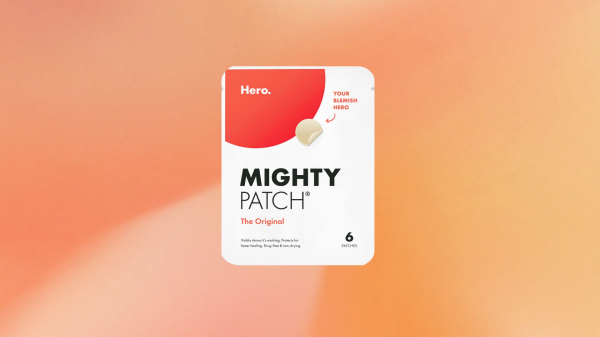
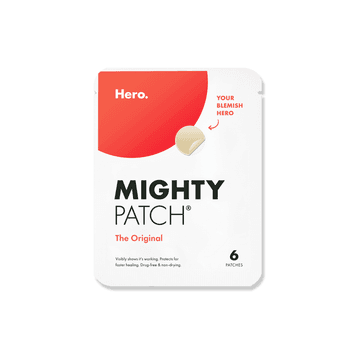
    Image may contain Advertisement Poster Business Card Paper and Text$12.99 at Hero CosmeticsSave StorySave this storySave StorySave this story

    TL;DR:

    • What it is: A hydrocolloid pimple patch
    • What it does: Helps shrink whiteheads–and protects from picking at them
    • Who it’s for: Anyone who’s ever been tempted to pick at a pimple

    Every time I get a pimple, I tell myself that this is the time I’m finally going to follow all the advice I’ve ever heard—and even written about—and leave it alone. Then, I inevitably catch myself poking and prodding it throughout the day, which, of course, only makes things worse (i.e. bigger, redder, and way more obvious)

    That’s where Hero Cosmetics Mighty Patch Original comes in. The tiny sticker has become my go-to, quick fix for all unexpected breakouts. It’s made with hydrocolloid to absorb what’s inside a whitehead (ew), while creating a barrier between my fingers and my face—which, honestly, is half the battle.

    Here’s how I use it: As soon as I spot a zit, I’ll apply a sticker to clean, dry skin and leave it on for…a long time (several hours or even overnight). Once it’s time to peel it off (usually the next morning), what was once an angry red dot becomes a shrunken-down version of itself. . In the case of a pimple patch, the best thing you can do for a pimple is to leave it alone—and let the sticker do the work.

    Hero Cosmetics Mighty Patch Original is in the July Allure Beauty Box.

    GET THE BOXHero Cosmetics Mighty Patch Original Patch

    Hero Cosmetics Mighty Patch Original Patch

    $12.99 at Hero Cosmetics$12.99 at Hero Cosmetics

  • Zendaya Just Made Red Eyeliner Look Cool, Not Contagious — See Photos

    Zendaya Just Made Red Eyeliner Look Cool, Not Contagious — See Photos

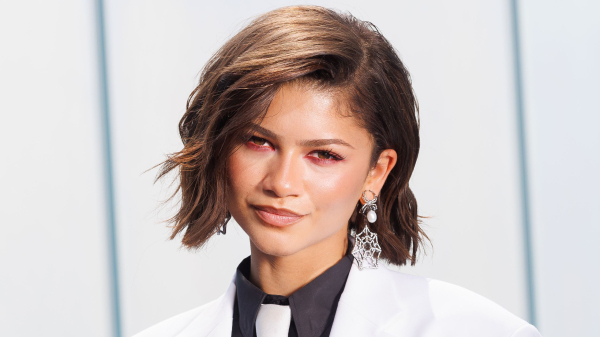
    Zendaya wearing a white suit and tie black shirt and spiderweb earringsPhoto: Getty ImagesSave StorySave this storySave StorySave this story

    Red eyeliner has a bit of a PR problem. For decades, makeup artists in movies and television have relied on using red around the eyes to tell us a character has been crying, hasn't slept in three days, or—if we're really leaning hard into the drama—has a case of pink eye. It's not exactly the color most of us instinctively reach for when we're trying to look awake and put-together.

    And then there's Zendaya.

    At the Spider-Man: Brand New Day photo call, the booked and busy actor somehow managed to make crimson eye makeup look not only remarkably wearable but downright elegant. Honestly, if anyone could convince us that the color associated with conjunctivitis belongs in our makeup routine, it was always going to be her.

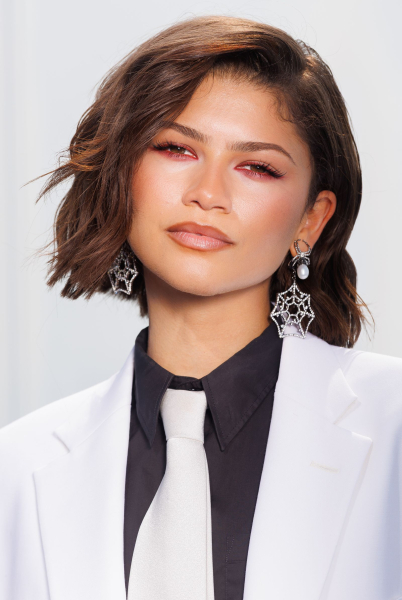
    For such a conspicuous color, the look was surprisingly restrained. Zendaya wore a thin ribbon of vibrant red all the way around her eye, hugging the upper lash line and coating her lower waterline, staying unbroken at the inner corner. The color was also gently smudged below her lower lashes, winging ever so faintly upward at the outer corner. Wispy clusters of black lashes and softly defined brows and lips kept the look grounded.

    Zendaya wearing a white suit and tie black shirt and spiderweb earringsPhoto: Getty Images

    Keeping on theme of keeping on theme (see: every look she’s worn to every movie event she’s attended this year), Zendaya framed the makeup look with a pair of sparkling spiderweb earrings that couldn't have been a more perfect nod. And considering Spider-Man's signature suit, the crimson liner felt less like an unexpected beauty choice and more like an extremely intentional reference.

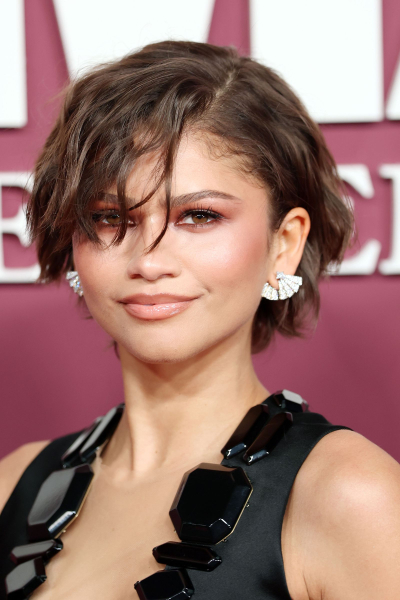
    Does this eye makeup feel vaguely familiar? Your memory isn't playing tricks on you. Just this past March, while promoting The Drama, Zendaya wore another striking red eye look that leaned even more editorial, proving this isn't a one-off experiment but a color she's genuinely embracing.

    Zendaya smiling with her hair in her eyesPhoto: Getty Images

    If Zendaya has you reconsidering a color you've spent your entire life keeping out of your waterline, you don't have to call on a superhero makeup artist to make it work. Make Up For Ever Artist Color Pencil in 714 Full Red and Nyx Professional Makeup Epic Inky Stix in Robotic Red make experimenting with red eyeliner feel a whole lot less intimidating.

  • 9 Best Retinal Serums for Smoother, Firmer, Brighter Skin

    9 Best Retinal Serums for Smoother, Firmer, Brighter Skin

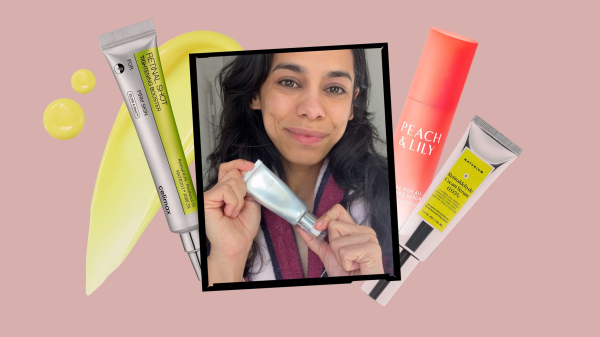
    Image contains Allure editor Shanna Shipin holding Medik8 Crystal Retinal surrounded by a collage of the best retinal serumsCollage: Paula Balondo; Source images: Courtesy of Allure editor and brandsSave StorySave this storySave StorySave this story

    You may be long out of school, but is it time to graduate? If you’re ready to level up from your beginner-level retinol serum, the best retinal serums and creams can deliver faster results in your skin-care routine. Yes, that's retinal, with and “a”—and it'll get you smoother skin, fewer breakouts, and a brighter, more even skin tone without jumping straight to a prescription-strength retinoid like tretinoin or adapalene.

    “Retinal—also called retinaldehyde—and retinol are both vitamin A derivatives,” says Asmi Berry, DO, a board-certified dermatologist in Los Angeles. “However, retinal is one step closer to becoming retinoic acid, which is the active form that binds to receptors in your skin to stimulate collagen production and skin cell turnover.” Because of that, retinal can work more quickly and more efficiently than even the best retinol cream.

    In fact, “retinal is 10 times more potent than retinol,” says Noah Levit, MD, a board-certified dermatologist in Connecticut. It’s no wonder many dermatologists refer to it as liquid gold, and some even use a retinal face serum themselves. “I’ve been using vitamin A for decades—it’s truly been my fountain of youth,” says Sonia Badreshia-Bansal, MD, a board-certified dermatologist in Danville, California. "Even in my late 40s, people still think I’m in my 20s or 30s.” While you won’t see results overnight, consistency can pay off.

    Our Top Retinal Serums

    • Best Overall: Medik8 Crystal Retinal, $85
    • Best for Uneven Texture: The Inkey List Advanced 0.2% Retinal Serum, $15
    • Best for Sensitive Skin: Peach & Lily Retinal For All Renewing Serum, $55
    • Best for Experienced Users: Paula’s Choice Clinical Pro Retinaldehyde Dual‑Retinoid Treatment, $68

    Frequently Asked Questions

    • Retinal versus retinol: What's the difference?
    • Is it better to use retinol or retinal?
    • Meet the experts
    • How we test and review products
    • Our staff and testers

    Heads up: As with other retinol products, “retinal should be avoided during pregnancy and breastfeeding,” Dr. Levit says. And, of course, pair it with sunscreen. Daily SPF is a must for anyone concerned with signs of aging, but it becomes even more important when using retinal, which can leave skin more sensitive to UV exposure. If you have the green light, check out these derm-approved picks that deliver real results.

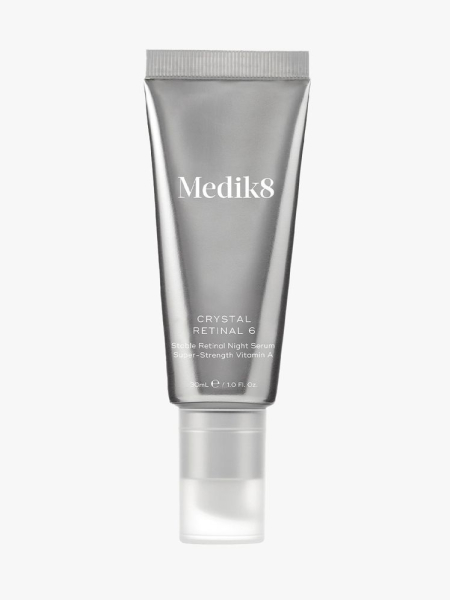
    Best Retinal Serum Overall: Medik8 Crystal Retinal

    Medik8 Crystal Retinal 6 silver tube on light gray backgroundSave to wishlistSave to wishlist

    Medik8

    Crystal Retinal 6

    $87

    Amazon

    $87

    Dermstore

    Why we love it: With strengths ranging from 0.01% to 0.24% retinaldehyde, Medik8 Crystal Retinal has something for everyone, from sensitive skin newbies to seasoned retinoid pros. Its stability system sets it apart, which is essential to ensuring you’re getting an effective formula with minimal irritation. This formulation uses crystal encapsulation technology (like encapsulated retinol, just with retinal), a patented carrot seed oil complex, and airtight packaging—all designed to keep the retinal molecule ultra-potent and ultra-gentle. “It’s also formulated with hydrating ingredients like glycerin and hyaluronic acid to buffer any potential irritation, and the texture is creamy and fast-absorbing,” says Dr. Berry.

    The gradual system has made it popular among multiple Allure editors. “The brand makes it simple to ease into retinal use: You start with level 1 (sensitive) or 3 (beginner), then graduate to higher concentrations once your skin can tolerate them,” says former Allure content director Kara McGrath. "I haven't experienced any irritation with level 3, a rarity for my sensitive skin.”

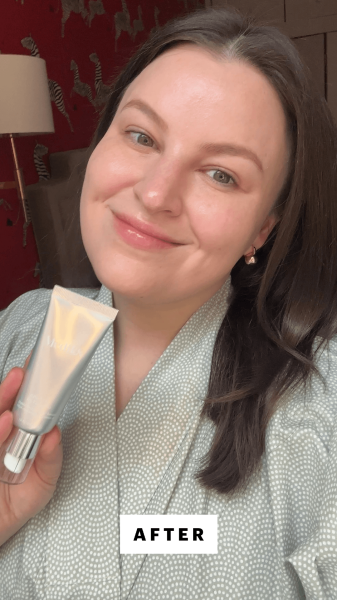
    Allure senior commerce director Shanna Shipin applying the Medik8 Crystal Retinal 1

    Shanna ShipinAllure senior commerce director Shanna Shipin after applying the Medik8 Crystal Retinal 1

    Shipin after applying the Medik8 Crystal Retinal 1

    Shanna Shipin

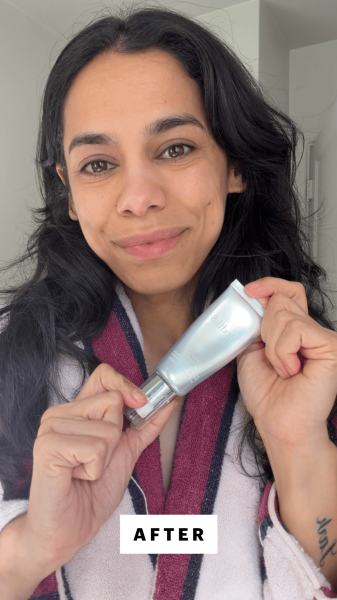
    Allure features director Dianna Singh applying the Medik8 Crystal Retinal 6

    Dianna SinghSingh after applying the Medik8 Crystal Retinal 6

    Singh after applying the Medik8 Crystal Retinal 6

    Dianna Singh

    Tester feedback from senior commerce director Shanna Shipin

    AccordionItemContainerButtonLargeChevron

    "I may be a beauty editor, but I'm new to retinal! After years of being spooked by the ingredient, I tried a few ‘clean’ retinol alternatives and wasn't compelled to keep any in my routine. It wasn't until I realized that Medik8 had an amazing gradual strength system that started at a very gentle beginner percentage of 0.01% retinal. After you finish a bottle and your skin tolerates it, you can carry onto the next! I started with the lowest-dose (Level 1) serum for very sensitive skin types, and it's been great for my dehydrated, eczema-prone skin. I especially have to be careful of dermatitis around my eyes, which tells me instantly when I've gone too far with a product. I'm on bottle number 2 of this level, and am just about ready to move on to level 3. I've seen an improvement in my closed comedones on my forehead, but have not yet seen quite the wrinkle-minimizing I'm hoping to see in the future; I haven't had a flare-up due to this product, so I know it's time to move up. What I love about this formula is that it's not as drying as other vitamin A (or retinol-adjacent) serums I've tried. There's glycerin in the formula, as well as HA to help offset overly drying out my skin. It's a breeze to rub in, and you hardly need any out of the pump-top to cover your face. The only drawback is that too much comes out of the bottle at once. I'd love for half of what is dispensed, just so I don't overdo it, or waste product!" —Shanna Shipin, senior commerce director

    Tester feedback from Allure features director Dianna Singh

    AccordionItemContainerButtonLargeChevron

    “When vitamin A works, it really works—and this formula is a testament to the ingredient's line-smoothing prowess. Plus, it's one of the few that doesn't make my skin extra sensitive or turn my pillow yellow. Once I finish this bottle, I'm going to move up to the ‘advanced’ strength version.” —Dianna Singh, Allure features director

    More to know

    AccordionItemContainerButtonLargeChevron

    • Retinal percentage: 0.01%, 0.03%, 0.06%, 0.1%, 0.2%, 0.24% twin-encapsulated retinaldehyde
    • Other key ingredients: glycerin, hyaluronic acid
    • Fragrance-free: yes
    • Who it’s for: beginner or expert retinal users

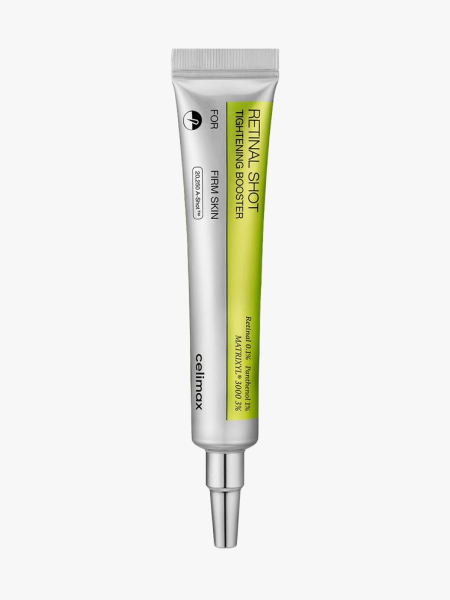
    Best for Dry Skin: Celimax The Vita A Retinal Shot Tightening Booster

    Celimax The Vita A Retinal Shot Tightening Booster in branded tube component on a light gray backgroundSave to wishlistSave to wishlist

    Celimax

    The Vita A Retinal Shot Tightening Booster

    $20 $17 (15% off)

    Amazon

    $24

    Ulta Beauty

    Allure editorial assistant Jennet Jusu applying the Celimax The Vita A Retinal Shot Tightening Booster

    Jennet Jusu

    Why we love it: Like so many gentle K-beauty brands, leave it to Celimax to figure out how to make retinal feel a little less intimidating. The Vita A Retinal Shot Tightening Booster pairs 0.1% retinal with the brand’s nano-sized delivery system, which breaks the retinal into smaller particles so it can disperse more evenly across the skin and penetrate more efficiently, helping smooth bumpy texture and refine skin with less irritation than stronger vitamin A products. The formula also contains 1% panthenol to cushion, soothe, and support the skin barrier, plus 3% Matrixyl 3000, a popular synthetic peptide complex made of palmitoyl tripeptide-1 and palmitoyl tetrapeptide-7, well-studied for their ability to support collagen production and improve skin firmness.

    Tester feedback from editorial assistant Jennet Jusu

    AccordionItemContainerButtonLargeChevron

    “I’m getting more into K-beauty and trying skin care that can actually make a difference for my dry, hyperpigmentation-prone skin. Celimax’s The Vita A Retinal Shot Tightening Booster is super lightweight and has basically no scent, which I love. After a few uses, my skin felt a little firmer, and by day three, I noticed one stubborn pore already looked smaller. I ended up liking it best sandwiched between my moisturizer and face mist, and it layered really nicely before I reapplied my sunscreen.” —Jennet Jusu, editorial assistant

    More to know

    AccordionItemContainerButtonLargeChevron

    • Retinal percentage: 0.1%
    • Other key ingredients: 1% panthenol, Matrixyl 3000
    • Fragrance-free: yes
    • Who it’s for: everyone

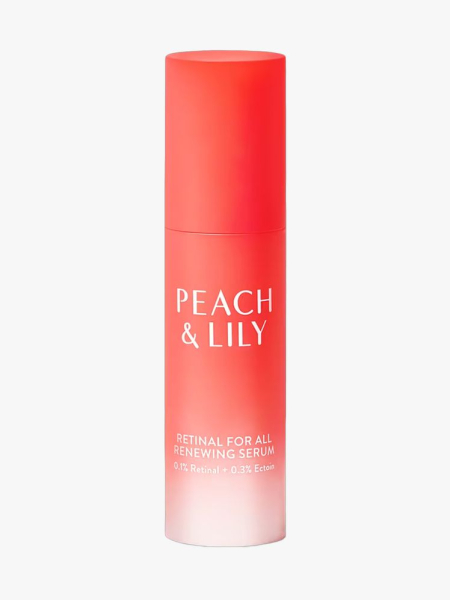
    Best for Sensitive Skin: Peach & Lily Retinal For All Renewing Serum

    Peach & Lily Retinal For All Renewing Serum in branded component on a light gray backgroundSave to wishlistSave to wishlist

    Peach & Lily

    Retinal For All Renewing Serum

    $55

    Ulta Beauty

    Allure contributing commerce writer Christa Joanna Lee applying the Peach & Lily Retinal For All Renewing Serum

    Christa Joanna Lee

    Why we love it: If your complexion goals include brighter, more even-looking skin—but your skin is notoriously sensitive to actives—this serum makes retinal feel surprisingly doable. Peach & Lily Retinal For All Renewing Serum uses 0.1% encapsulated retinal, which releases slowly into the skin to help smooth uneven tone and boost radiance. “It’s potent yet gentle, with the help of ectoin, which has been clinically proven to reduce retinoid-related irritation,” says Cheryl Karcher, MD, a board-certified dermatologist based in New York City.

    Plenty of retinoid serums say they’re friendly to sensitive skin, but this one backs it up: In the brand’s clinical testing, the formula showed zero (!) water loss after application and virtually no skin-barrier disruption. A calming lineup of heartleaf extract, ceramides, hyaluronic acid, and antioxidants does the behind-the-scenes work to keep irritation at bay while results build. “Together, it improves texture and tone with minimal side effects,” says Dr. Karcher.

    Tester feedback from contributing commerce writer Christa Joanna Lee

    AccordionItemContainerButtonLargeChevron

    “The bright yellow hue of Peach & Lily’s Retinal All-Renewing Serum isn’t just to cheer up your day—it turns out retinal in its pure form naturally runs that color (and yes, it disappears as soon as you rub it in). The texture hits a sweet spot, too: not so watery that it drips off before you can get it on your face, but not so thick that you’re massaging forever. Instead of leaving a glassy sheen, it feels like it’s sinking deeper and leaving things plush and cushioned from within. After a few nights, my skin felt baby-soft with zero hint of irritation.” —Christa Joanna Lee, contributing commerce writer

    More to know

    AccordionItemContainerButtonLargeChevron

    • Retinal percentage: 0.1% encapsulated retinal
    • Other key ingredients: ectoin, heartleaf extract, ceramides
    • Fragrance-free: yes
    • Who it’s for: people with sensitive skin

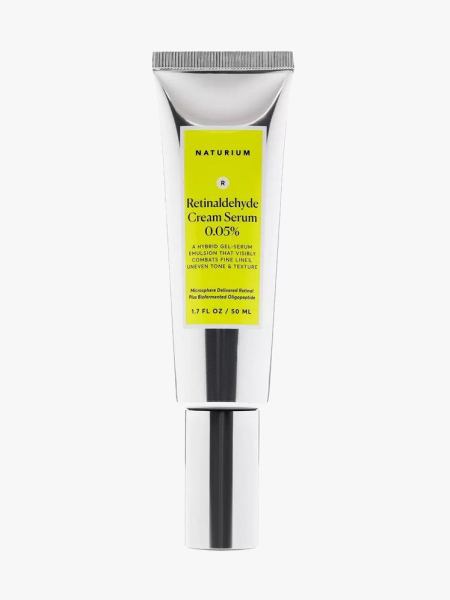
    Best for Beginners: Naturium Retinaldehyde Cream Serum 0.05%

    Naturium Retinaldehyde Cream Serum 0.05% reflective silver tube with neon yellow label on light gray backgroundSave to wishlistSave to wishlist

    Naturium

    Retinaldehyde Cream Serum 0.05%

    $29 $22 (24% off)

    Amazon

    $29

    Ulta Beauty

    $29

    Soko Glam

    Allure commerce editor Sarah Han applying the Naturium Retinaldehyde Cream Serum 0.05%

    Sarah Han

    Why we love it: For newbies ready to dip a toe into the world of retinal, the lowest concentration of Naturium's Retinaldehyde Cream Serum—which is available in 0.05%, 0.1%, and 0.15% strengths—is a gentle yet effective place to start. “Even at the 0.05% retinal concentration, it provides meaningful collagen support and smoothing effects while minimizing barrier disruption,” says Whitney Hovenic, MD, a board-certified dermatologist based in Reno, NV. “Gentle retinal options like this also help patients stay consistent with a lower risk of irritation, and consistency is what ultimately drives long-term results.”

    The rest of the ingredient list only strengthens its case for sensitive skin, pairing retinal with a cushioning base of glycerin to keep skin hydrated and comfortable. Fermented yeast extracts and soy amino acids support the skin barrier, while pomegranate extract and vitamin E provide antioxidant protection against daily environmental stressors. The creamy texture is also part of what makes it so approachable: It delivers the smoothing benefits of vitamin A without leaving sensitive skin feeling dry and tight.

    Tester feedback from commerce editor Sarah Han

    AccordionItemContainerButtonLargeChevron

    “I've been through two tubes of this Naturium retinal, starting with 0.05% before I worked my way up to 0.10%—and now they also offer 0.15%, which I'm sure my skin can tolerate since it's not particularly sensitive. I love how lightweight this gel is, and despite its fun yellow coloring, it basically disappears into your skin on contact. It's so airy and layers beautifully with all of my other nighttime skin-care products. (It's sandwiched between essence and moisturizer). I've never experienced any irritation, but if I need an extra dose of hydration in the winter, I'll follow up with a more viscous hydrating serum like Torriden's Dive In Serum. I love how accessible Naturium's price points are across the board, but especially for a retinal. $29 in this economy? Not too shabby when other formulas easily surge past $50.” —Sarah Han, commerce editor

    More to know

    AccordionItemContainerButtonLargeChevron

    • Retinal percentage: 0.05%, 0.1%, 0.15%
    • Other key ingredients: glycerin, fermented yeast extracts, soy amino acids, vitamin E, pomegranate extract
    • Fragrance-free: yes
    • Who it’s for: people with sensitive skin

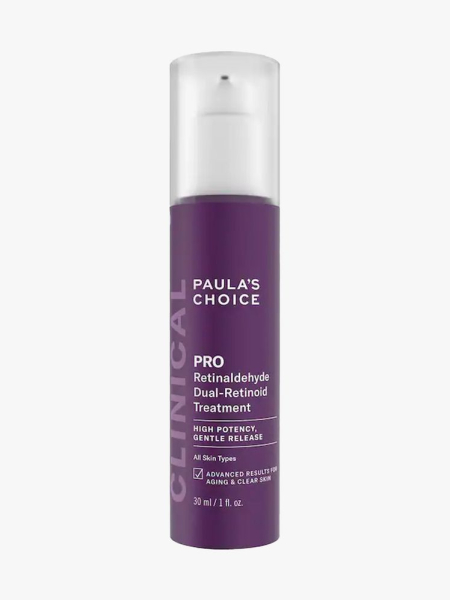
    Best for Experienced Users: Paula’s Choice Clinical Pro Retinaldehyde Dual‑Retinoid Treatment

    Paula’s Choice Clinical Pro Retinaldehyde Dual‑Retinoid Treatment in branded component on a light gray backgroundSave to wishlistSave to wishlist

    Paula's Choice

    Clinical Pro Retinaldehyde Dual‑Retinoid Treatment

    $68

    Amazon

    $68

    Sephora

    Allure editor in chief Jessica Cruel applying the Paula’s Choice Clinical Pro Retinaldehyde Dual‑Retinoid Treatment

    Jessica Cruel

    Why we love it: While 0.1% retinal alone is typically considered beginner-friendly, it’s the addition of 0.16% Adapinoid (oleyl adapalenate) that makes the Paula’s Choice Clinical Pro Retinaldehyde Dual-Retinoid Treatment more of an intermediate-to-advanced retinoid formula. Oleyl adapalenate is an oil-soluble adapalene derivative designed to be gentler than traditional adapalene, and together the two retinoids tackle skin from different angles: Retinal supports collagen production, smooths texture, and softens the look of fine lines, while the adapalene derivative encourages additional cell turnover and promotes clearer-looking skin.

    Fortunately, the formula doesn't simply throw two retinoids together and call it a day: Jojoba oil, glycerin, and dimethicone cushion skin against dryness and improve tolerability. Saccharomyces ferment, mushroom extract, pomegranate extract, and vitamin E further soothe and support the skin barrier, making this an ideal option “for those who want stronger mature skin benefits, but not quite ready for prescription retinoids,” says Dr. Hovenic.

    Tester feedback from editor in chief Jessica Cruel

    AccordionItemContainerButtonLargeChevron

    “It has a lightweight, silky texture that smooths easily over skin—no stinging, no burning. Like all dermatologists recommend, I only use about a pea-size amount all over my face at night before topping with my favorite thick moisturizer. I had a deflated pimple that just wouldn't disappear, and after a few nights using this retinal it was noticeably smaller. A couple weeks later the post-acne darkness was less pronounced as well.” —Jessica Cruel, editor in chief

    More to know

    AccordionItemContainerButtonLargeChevron

    • Retinal percentage: 0.1% retinal
    • Other key ingredients: 0.16% Adapinoid, jojoba oil, glycerin, dimethicone, Saccharomyces ferment, mushroom extract, pomegranate extract, vitamin E
    • Fragrance-free: yes
    • Who it’s for: people who want a more advanced retinoid option

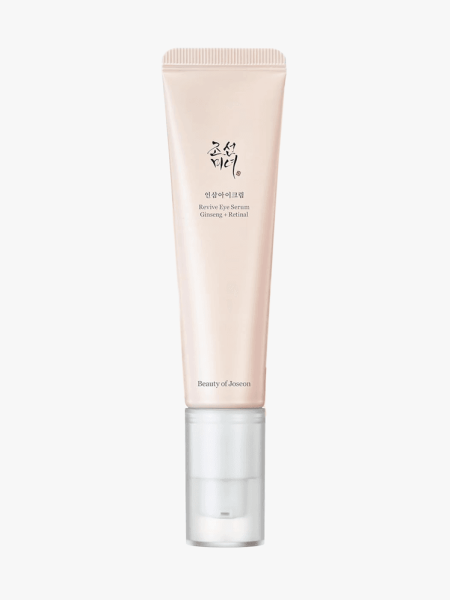
    Best Eye Cream: Beauty of Joseon Revive Eye Cream Ginseng + Retinal

    Beauty of Joseon Revive Eye Cream Ginseng + Retinal in branded light pink tube with white pump on light gray backgroundSave to wishlistSave to wishlist

    Beauty of Joseon

    Revive Eye Cream Ginseng + Retinal

    $17

    Amazon

    $17

    Sephora

    Han applying the Beauty of Joseon Revive Eye Cream Ginseng + Retinal

    Sarah Han

    Why we love it: If your under-eyes are starting to rat you out for your doom-scrolling and repeat pizza nights, Beauty of Joseon Revive Eye Cream is one of our favorite Korean eye creams for faking the look of eight hours of sleep—though maybe hydrate and log off once in a while, yeah? Inspired by traditional Korean hanbang skincare, this silky cream blends ginseng (the OG brightener and circulation booster) with gentle, effective retinal to smooth fine lines and depuff tired eyes. The lightweight, serum-like texture melts right in, leaving your eye area looking firmer, glowier, and way more put-together than you feel.

    Tester feedback from Han

    AccordionItemContainerButtonLargeChevron

    "I'm unconvinced eye creams provide long-term, visible results (e.g. minimizing the look of fine lines and wrinkles) without retinoids involved. Beauty of Joseon's Revive has been a staple in that regard. The custardy formula absorbs almost immediately and makes my undereyes look refreshed and slightly brighter. I even dab some onto my forehead lines (not super noticeable as of now, but you can't be too preventative)." —Han, commerce editor

    More to know

    AccordionItemContainerButtonLargeChevron

    • Retinal percentage: not disclosed
    • Other key ingredients: ginseng, niacinamide
    • Fragrance-free: yes
    • Who it’s for: all skin types

    More retinal serums we love:

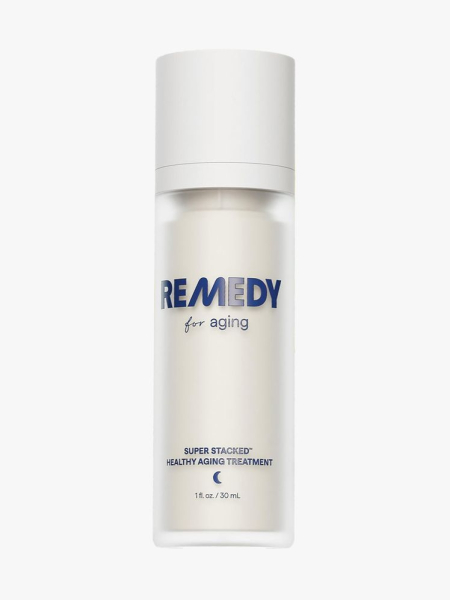
    Best for Dull Skin: Remedy Science Super Stacked Healthy Aging Treatment

    Remedy Super Stacked Healthy Aging Treatment in branded component on a light gray backgroundSave to wishlistSave to wishlist

    Remedy

    Super Stacked Healthy Aging Treatment

    $35

    Amazon

    Why we love it: If you’re already well-versed in the benefits of retinal and ready to streamline your routine, Remedy Science Super Stacked Healthy Aging Treatment makes a strong case for doing more with less. It combines 0.1% encapsulated retinol and 0.05% retinaldehyde—“a formulation recommended for more experienced retinol users to smooth fine lines and improve texture,” says Patricia Oyetakin, MD, a board-certified dermatologist based in Newnan and Stockbridge, GA. From there, it layers in peptides like argireline and Matrixyl 3000 for firmness, glycolic acid for gentle resurfacing, niacinamide for brightness, and ceramides to keep skin comfortable. “It’s truly a one-and-done option for busy people who want visible results without a complicated routine,” says Dr. Oyetakin.

    More to know

    AccordionItemContainerButtonLargeChevron

    • Retinal percentage: 0.05%
    • Other key ingredients: 0.1% encapsulated retinol, 2% argireline, glycolic acid, 2% niacinamide, Matrixyl 3000
    • Fragrance-free: yes
    • Who it’s for: people with mature skin

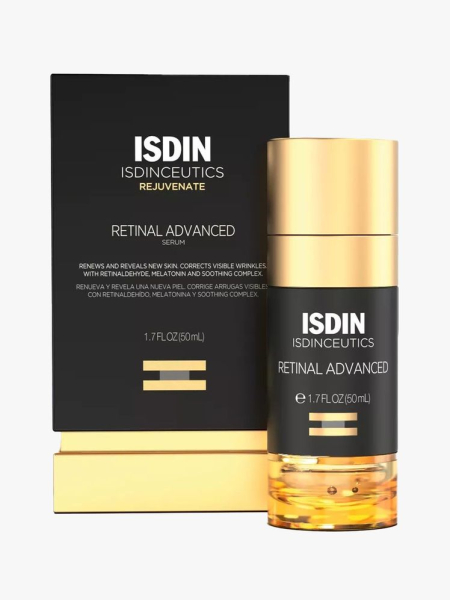
    Best for Mature Skin: Isdin Isdinceutics Retinal Advanced Serum

    Isdin Isdinceutics Retinal Advanced Serum gold and black bottle and box on light gray backgroundSave to wishlistSave to wishlist

    Isdin

    Isdinceutics Retinal Advanced Serum

    $185

    Amazon

    $185

    Dermstore

    Why we love it: Not your first rodeo with retinal? Then Isdin Retinal Advanced Rejuvenating Facial Night Serum is a great next step to level up your routine. “It’s a dual-phase formula with both an oil phase and an aqueous phase, leaning more toward the hydrating and moisturizing side,” says Dr. Levit. “The oil phase delivers the key actives—including retinaldehyde and bakuchiol—while ingredients like dimethicone help protect the skin and glycerin boosts hydration. Melatonin is another standout for its skin-repairing benefits,” he says. If you have sensitive skin, just a heads-up: It’s lightly fragranced. But, according to Dr. Levit, “most of my patients find the scent pleasantly subtle—and they actually appreciate that it tones down the overly ‘clinical’ smell you sometimes get with fragrance-free treatments.”

    More to know

    AccordionItemContainerButtonLargeChevron

    • Retinal percentage: not disclosed
    • Other key ingredients: bakuchiol, melatonin
    • Fragrance-free: no
    • Who it’s for: all skin types

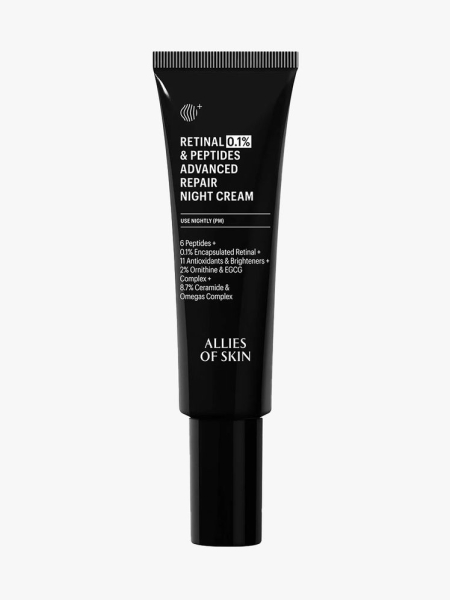
    Best for Dark Spots: Allies of Skin Retinal 0.1% & Peptides Advanced Repair Night Cream

    Allies of Skin Retinal 0.1% & Peptides Advanced Repair Night Cream black tube on light gray backgroundSave to wishlistSave to wishlist

    Allies of Skin

    Retinal 0.1% & Peptides Advanced Repair Night Cream

    $130

    Amazon

    $130

    Nordstrom

    $130

    Dermstore

    Why we love it: From dryness and breakouts to fine lines and dark spots, Allies of Skin’s Retinal 0.1% & Peptides Advanced Repair Night Cream is your skincare all-in-one. It blends encapsulated retinal (for a gentler retinoid experience), six firming peptides, and 11 antioxidants and brighteners to smooth texture, give an even tone, and bring out your skin’s glow. “This serum is great for anyone looking for retinal paired with barrier-loving ingredients like ceramides, and peptides,” says Dr. Berry. “It’s powerful but gentle, feels soft on the skin, and layers well with other actives. I especially recommend it for patients with drier skin.”

    More to know

    AccordionItemContainerButtonLargeChevron

    • Retinal percentage: 0.1%
    • Other key ingredients: peptides, ceramides, omegas
    • Fragrance-free: yes
    • Who it’s for: all skin types, especially for dry skin

    Frequently Asked Questions

    Retinal versus retinol: What's the difference?

    “Retinal and retinol are both vitamin A derivatives, but retinal is one step closer to retinoic acid—the active form your skin uses. That means it works faster and is typically more potent than retinol,” says Dr. Levit. While retinol needs two conversions in the skin to become active, retinal only needs one, so you’ll often see quicker results when smoothing fine lines, improving texture, and fading dark spots. That said, “retinal can also be slightly more intense, so it’s usually recommended for those who’ve already built some tolerance to retinoids,” he says.

    Is it better to use retinol or retinal?

    It depends. “If you have sensitive skin or are brand-new to retinoids, retinol is a great place to start,” says Dr. Berry. “If you're already tolerating retinol well, or you're targeting deeper wrinkles, pigmentation, or acne, retinal can offer faster and more noticeable results with less irritation than prescription-strength options.”

    Meet the experts

    • Sonia Badreshia-Bansal, MD, a board-certified dermatologist and RealSelf expert based in Danville, CA
    • Asmi Berry, DO, a board-certified dermatologist in Los Angeles
    • Whitney Hovenic, MD, a board-certified dermatologist and co-founder of Spooge based in Reno, NV
    • Cheryl Karcher, MD, a board-certified dermatologist at Center Aesthetic & Dermatology based in New York City
    • Noah Levit, MD, a board-certified dermatologist of Dermatology Physicians of Connecticut based in Fairfield, Hamden, and Norwalk, CT
    • Patricia Oyetakin, MD, a board-certified dermatologist of Epiphany Dermatology based in Newnan and Stockbridge, GA

    How we test and review products

    When Allure tests a product, our editors look at it from every angle in an effort to best serve you. We review ingredients, scrutinize brand claims, and, when necessary, examine peer-reviewed scientific and medical studies. In addition to testing each and every product that's included in each and every review, we rely on experts who shape their fields, including dermatology, cosmetic chemistry, and medicine, to help us vet the ingredients and formulas.

    For our list of the best retinal serums, we considered each product's performance across five primary categories: product ingredients and efficacy, packaging, fragrance, texture, and product wear. Every product was determined to have excelled in each category by our editorial team, which is composed of in-house writers and editors as well as contributors—along with special consideration from dermatologists. To learn more information on our reporting and testing processes, read our complete reviews process and methodology page.s involved in our reporting, check out our complete reviews process and methodology page.

    Our staff and testers

    A beauty product is a personal purchase. You might be searching for a face cream to address persistent dryness or a new nail product to add to your Sunday self-care routine; you may simply be browsing around for the latest launches to hit the hair market. No matter what you seek or your individual needs and concerns, Allure wants to ensure that you love anything we recommend in our stories. We believe that having a diverse team of writers and editors—in addition to the wide range of outside testers and industry experts we regularly call upon—is essential to reaching that goal.

    After all, can we really say a skin-care product is the "best" for people over 50 if the only testers we've solicited opinions from folks who have yet to hit 30? Can we honestly deem a high-end diffuser worthy of your hard-earned cash if it's never been tested on curls? We're proud that our staff spans a wide range of ages, skin tones, hair textures, genders, and backgrounds, which means that we are able to fairly assess any beauty product that comes into the beauty closet.

  • SkinCeuticals Just Reformulated Its C E Ferulic Serum

    SkinCeuticals Just Reformulated Its C E Ferulic Serum

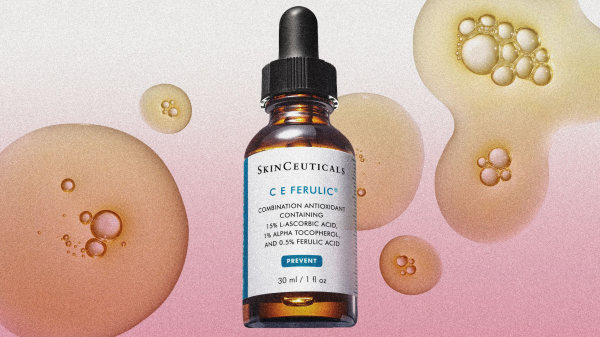
    photo of skinceuticals ce ferulic bottle on pink gradient background with serum dropletsDesign: Briana Rengifo; Photo: Courtesy of brandSave StorySave this storySave StorySave this story

    SkinCeuticals C E Ferulic Serum is iconic. We don’t use that word lightly here at Allure, but this skin-care product has certainly earned it. C E Ferulic has won eight Best of Beauty and Readers’ Choice Awards (six and two, respectively)—no small feat, especially for a 1-ounce serum that costs nearly $200.

    Since its launch in 2005, C E Ferulic has become well-known as one of the best antioxidant formulas on the market. Its primary claims to fame are its ability to brighten skin, combat hyperpigmentation, and add hydration. This has all been done via a potent mix of the three ingredients in the name: 15% vitamin C, 1% vitamin E, and 0.5% ferulic acid. People are, in a word, obsessed with the results they say they see from adding CEF to their routine.

    So if you heard a strange, faint gust of wind on July 20, 2026, it was likely the collective gasp of skin-care enthusiasts and dermatologists around the globe after SkinCeuticals announced it had reformulated the best-selling formula. The corresponding press release—which the Allure team got access to in early July, along with product samples—says CEF 2.0 is building on the original’s legacy by way of “exclusive longevity technology.”

    Just reading the word “longevity,” a now-inescapable marketing term, fills me with a profound mix of dread and exhaustion. But, as a C E Ferulic loyalist at my core, my interest was piqued. Here’s everything we know about the update, plus our honest thoughts after testing the serum for a few weeks.

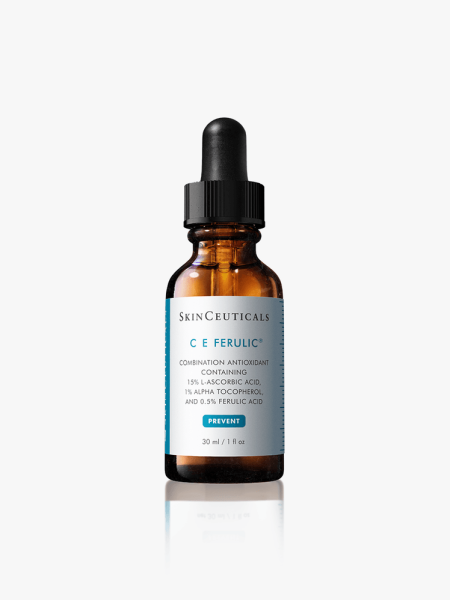
    Image may contain: Herbal, Herbs, Plant, Bottle, and LotionSave to wishlistSave to wishlist

    SkinCeuticals

    SkinCeuticals C E Ferulic

    $185

    SkinCeuticals

    Why Did SkinCeuticals Reformulate Its C E Ferulic Serum?

    Why on earth would SkinCeuticals go and mess with a formula that is widely considered the best of the best? “It was a delicate decision, obviously,” Stephen Lynch, head of skin-care valorization, research and innovation for North America at L’Oréal Groupe (meaning he helps guide product development and then tells the general public about those new innovations), tells Allure. But it’s been 20 years since the original launch and, according to Lynch, the team has never stopped trying to improve on it.

    “We have always been thinking, ‘How could we modernize [the serum] or bring a little extra while preserving what we have?” Lynch says. He insists that the bidecadal anniversary was just “the right time” to roll out a new-and-improved version.

    Fair, but also…the patent on the original formula expired last year, leaving doors open for other brands to launch extremely similar serums, at least as far as the ingredient list goes. With no active patent on the formula, L’Oréal, SkinCeuticals’ parent company, couldn’t bring an infringement lawsuit against those brands as it had against Drunk Elephant in 2020. In the US, once a patent expires after the standard 20-year period of exclusivity, it has really expired: You can’t just keep renewing it every two decades, explains Sheila Swaroop, a registered patent attorney and partner at Knobbe Martens in California.

    This new version of C E Ferulic is “powered by exclusive double patent-pending technology,” according to the company’s press release, which could certainly be a way to re-establish the claim that no one’s doing it quite like SkinCeuticals. Says Swaroop, “If you develop a different product and it's different enough from the original product that you can secure patent protection for it, then that can be a strategy” to sort of get your patent back. (Patents are different from “trade secrets,” which is the method Coca-Cola has used to keep its formula confidential since its invention in the 1880s, Swaroop notes; those are valid indefinitely, as long as the company never discloses the formula publicly.)

    According to Swaroop, there is no set percentage of a formula that needs to change for it to qualify as a new patent. It depends on the patent office, she says, but there generally needs to be a “true difference in the formulation” or “some additional, unexpected benefit” that didn’t come from the original.

    When I ask Lynch if the patent expiration has anything to do with the timing of this reformulation, he shakes his head: “We already had a lot of research in process,” he says. “There have been a lot of advances in the science [since the original launched], so we were ready to go.”

    What’s Different About the New SkinCeuticals C E Ferulic Serum Formula?

    This new C E Ferulic is not going to be an additional SKU in the SkinCeuticals lineup; the brand is phasing out the old version entirely. Now, an assurance for the sweaty-palmed folks who are trying to figure out where they can still buy the original formula before it vanishes for good: Lynch insists that, for the most part, the new C E Ferulic Serum is very similar to the old, beloved version. The only difference the brand is disclosing is the addition of two new ingredients: 1% endophytol and 0.3% carnosine (more on both in a second).

    “It can be challenging to predict results just by looking at an ingredient list, but I would also be hesitant to speculate a dramatically different experience with the new formula,” cosmetic chemist Ava Perkins tells Allure after we sent over the press materials for her thoughts. “I would anticipate the main antioxidant system to still be doing the heavy lifting and the new additions to be complementary, or boost the results people already see from the original formula, like improving discoloration, elasticity, radiance, and tone.” Indeed, it seems that those two new ingredients will likely just enhance the CEF experience fans are used to.

    New Ingredient: Endophytol

    Let’s start with endophytol, a new trademarked ingredient derived from dandelion extract: “It’s a very nice anti-inflammatory,” Lynch says, noting that reports of skin irritation from the original CEF are what inspired the company to look into anti-inflammatory ingredients that might pair well with the existing mix. “If [a customer was] getting a little bit of that redness, a little bit of that irritation, they might see a slight mitigation of that [with the updated formula].”

    This is potentially huge news for the group of people whom I can anecdotally confirm find the old formula is too harsh for their skin. “If endophytol helps with inflammation, as it claims, it would be a fantastic addition to the formula considering pure ascorbic acid formulas tend to be irritating for many,” Perkins says. “This would signal to me that they are listening to their consumer feedback and improving their formula in ways that would make it both more efficacious and more friendly to use.” (SkinCeuticals’ research team has conducted in vitro ingredient studies on endophytol, but they will not have results of those studies until closer to the end of this year or early next year.)

    New Ingredient: Carnosine

    The second new ingredient is carnosine, another antioxidant and dipeptide that Perkins says—unlike endophytol—has been used in skin care for a while. “Simply put, it can help reduce the appearance of fine lines and wrinkles,” she explains, noting that the addition “aligns with the longevity trend booming in the skin-care space right now.” (See? Inescapable.)

    Lynch says they added carnosine to the already antioxidant-packed formula after realizing that “vitamin C is maybe not the best ingredient to fight glycation,” a natural process that can lead to early signs of aging, like the aforementioned fine lines and wrinkles, as well as skin sallowness. “We think carnosine is a really great ingredient for this,” Lynch says. Vitamin C, he adds, also helps improve the appearance of fine lines and wrinkles, but its real strength is in brightening and combatting discoloration. The addition of carnosine is meant to complement the ascorbic acid for even more noticeable results.

    How does the new formula stand up to the old one in terms of long-term results? That's still a question mark: SkinCeuticals said they are working on clinical studies of the new products, but don't have anything to share yet.

    Scent and Texture Differences

    While our editors believe there’s a slight difference in the texture and scent of the new formula, Lynch says loyal customers should expect them to be about the same. Of the texture—a rich-but-lightweight liquid that feels quite hydrating for a serum—Lynch says, “It’s going to be very similar to all our consumers. I think they’ll enjoy it.”

    The legendary hot-dog scent isn’t going anywhere, either, because as Lynch says, it comes from the blend of ingredients in the original formula, which isn’t being eliminated.

    Packaging Differences

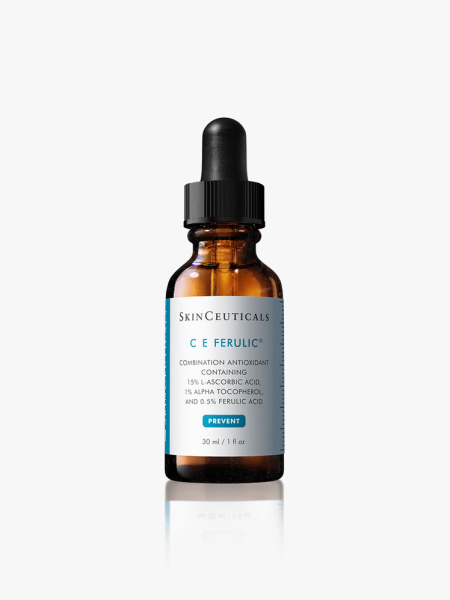
    There is no visible difference in the new packaging: CEF will still come in an amber, 1-ounce bottle with a dropper applicator. The new label is exactly the same as the original, with no special mention of the two new ingredients anywhere other than the ingredient list.

    That’s it! Otherwise, the product—and the price point of $185—remains the same. “It was really a challenging project,” Lynch says of trying to update the product without disappointing hoards of loyal fans. “I'm really proud of the way we were able to keep the essence of the original formula.”

    Editor Reviews

    I got a bottle of the new formula only about a week before launch, so my impressions are still very much in the “first” stage. To me, the serum texture (lightweight with a touch of hydration) feels and smells (like the OG, often described as “hot-dog water,” a scent I find comforting) about the same as the original. My skin has neither been instantly transformed nor irritated, but I didn’t have any sensitivity with the old formula, either.

    Allure senior staff writer Elizabeth Gulino agrees: “I notice zero differences between the old version and the new one, besides the fact that my older one has oxidized,” she says. “This is amazing news for someone like me who hates when things change.”

    Kassidy Silva, Allure social director, used up her last bottle two months ago and was tempted to try a dupe, but is happy she ultimately waited it out. “It’s still the C E Ferulic I’ve grown to know and love,” she says. “Dare I say the smell is a little less pungent than the original? I get more ‘mustard ham’ than ‘hot-dog water.’” After just a week, she thinks she’s noticing a little extra glow to her skin.

    Allure executive beauty director Jenny Bailly has picked up on even more differences. “OG C E Ferulic feels thicker; there’s more heft to it,” she says. “The new one is more watery and silky.” She, too, feels the smell is less pungent (“Maybe a faint note of bologna?”). “I don't like change, and I was very happy with the color, texture, and yes, the hot-dog-water scent of the old C E Ferulic,” Bailly adds. “But if the people at SkinCeuticals say this updated version will be even better for my skin…they have not steered me wrong in the past, so I’m in.”

    The new-and-improved SkinCeuticals CE Ferulic retails for $185 and is out now at skinceuticals.com.

    Image may contain: Herbal, Herbs, Plant, Bottle, and LotionSave to wishlistSave to wishlist

    SkinCeuticals

    SkinCeuticals C E Ferulic

    $185

    SkinCeuticals

    More innovative skin-care products to check out:

    • The Medicube Booster Pro X2 Is the Closest Thing to a Seoul Skin-Care Clinic
    • Ilia’s First Sunscreen Is Here, and It’s Already a Staple in Our Routines
    • Is the New Armani Luminous Silk Foundation Even Better Than the Original?
  • 8 Best Hair Straighteners for Every Hair Type, According to Stylists

    8 Best Hair Straighteners for Every Hair Type, According to Stylists

    Image contains an Allure editor holding the  GHD Platinum Styler surrounded by a collage of the best hair straighteners...Collage: Paula Balondo; Source images: Courtesy of Allure editor and brandsSave StorySave this storySave StorySave this story

    Whether straightening your hair is an occasional or daily occurrence, your delicate strands deserve to be styled with one of the best hair straighteners. And just like hair dryers and blow-dryer brushes, today's flatirons come in a dizzying array of options, each designed for a different hair type, texture, or styling goal.

    The first decision is plate material. Ceramic plates distribute heat evenly, making them a great choice for fine, damaged, or color-treated hair. Titanium heats up faster and maintains higher temperatures, which is why it's often preferred for thick, coarse, or textured hair that needs extra power. Then there are the newer innovations (many of which have earned Best of Beauty Awards): flexing plates (by Dyson, who else?) that hug the hair, sonic vibrations that distribute heat more evenly, airflow technology that cools and sets your style as it straightens, and smart sensors that adjust heat in real time—all designed to maximize shine while minimizing unnecessary damage.

    Our Top Hair Straighteners

    • Best Overall: GHD Platinum+ Styler, $319
    • Best for Textured Hair: BabylissPro Nano Titanium Ultra-Sleek Hair Straightener, $100
    • Best for Frizz: Bio Ionic 10X Styling Iron, $262
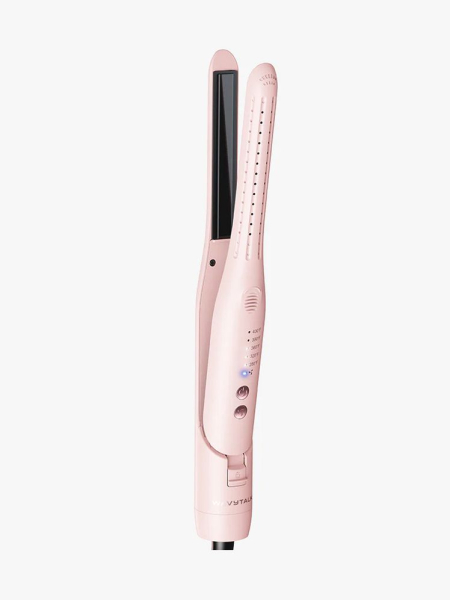
    • Best for Short Hair: Wavytalk Cool Curl Pencil, $30

    To find the best hair straighteners, we tested top-rated models and consulted hairstylists to learn which ones are truly worth the investment. Whether you're after pin-straight strands, glossy waves, or a multitasking tool that can do both, there's a flatiron here that'll make your styling routine noticeably smoother. Just remember that applying a heat protectant before styling is crucial.

    Frequently Asked QuestionsAccordionItemContainerButtonLargeChevron

    • Are hair straighteners safe for my hair?
    • How do I minimize heat damage from my straightener?
    • How do hair straighteners work?
    • What are the differences between ceramic and titanium plates?
    • How should I choose a hair straightener?
    • Meet the experts
    • How we test and review products
    • Our staff and testers

    Best Overall: GHD Platinum+ Styler

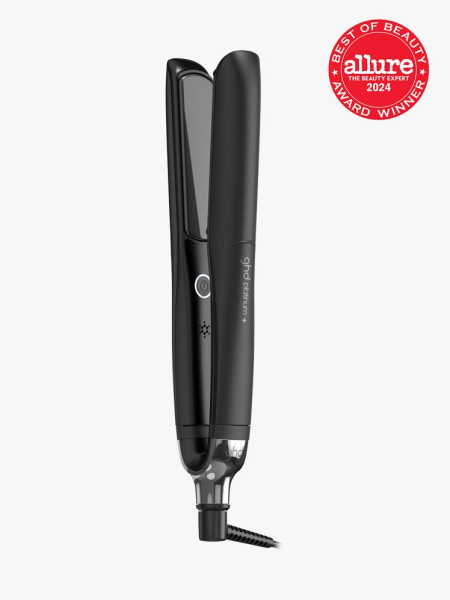
    branded black and silver corded flat iron on light gray background with red and white 2024 allure best of beauty sealSave to wishlistSave to wishlist

    GHD

    Platinum+ Styler

    $319

    Amazon

    $319

    Ulta Beauty

    $319

    Sephora

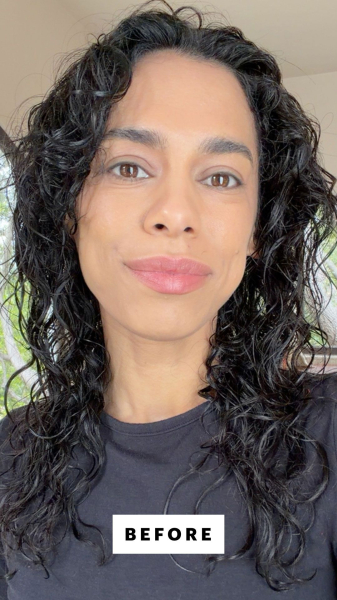
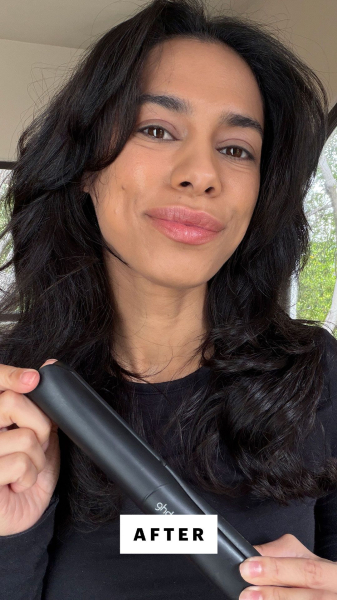
    Allure senior commerce director Shanna Shipin using the GHD Platinum+ Styler

    Shann Shippin

    Why it's worth it: To minimize heat damage without sacrificing sleek results, reach for the GHD Platinum+ Styler. Its proprietary Ultra-Zone predictive technology monitors heat 250 times (!) per second, continuously adjusting power to keep both plates at GHD’s optimal styling temperature of 365°F—hot enough to style effectively without unnecessary overheating. Rather than letting the plates cool as you work through larger sections or repeated passes, the tool responds in real time to maintain consistent heat from root to tip for smoother, shinier results.

    The Allure Best of Beauty Award-winning styler also features “a rounded barrel, making it just as easy for creating soft waves and curls as it is for sleek, straight styles,” says May Paulina, a hairstylist based in Florida. Another often overlooked feature you'll appreciate every time you style: “The wishbone hinge keeps hair from catching and snagging between the plates,” says Taylor Murphy, a hairstylist based in Raleigh, North Carolina.

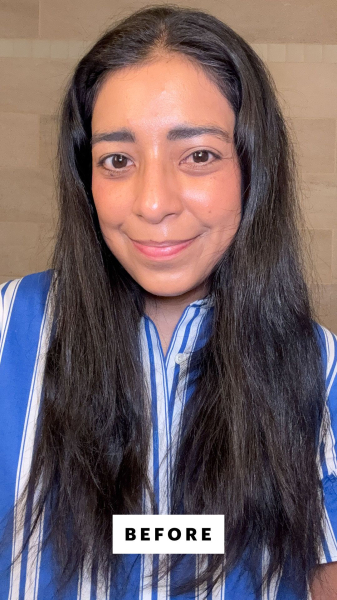
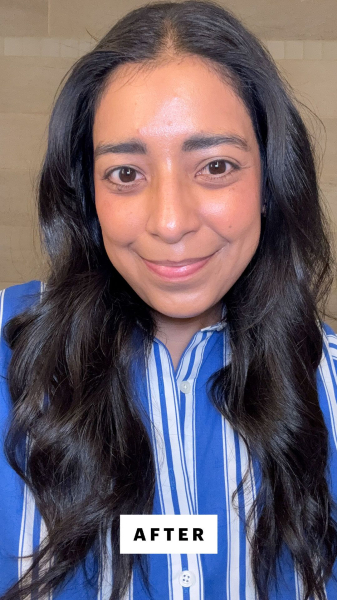
    Shanna Shipin before using the GHD Platinum Styler

    Shipin before using the GHD Platinum+ Styler

    Shanna ShipinShanna Shipin after using the GHD Platinum Styler

    Shipin after using the GHD Platinum+ Styler

    Shanna Shipin

    Tester feedback from senior commerce director Shanna Shipin

    AccordionItemContainerButtonLargeChevron

    "In all of my years of straightening (at least 15 years), my repertoire has never had a more heat-safe, versatile, and quality straightener. I've had my current Platinum+ since it launched in 2018, and not once has it crapped out on me; no hint of the coil ripping or the plates loosening. It's practically as good as new—and that's saying something since I straighten my entire head of hair at least once per week." She loves how simple it is to use, too—there's no fancy LED screen and only one button to operate it. —Shanna Shipin, senior commerce director

    More to know

    AccordionItemContainerButtonLargeChevron

    • Plate material: ceramic
    • Plate size: 1”
    • Heat settings: 1 (365°F)
    • Cord length: 8.8 ft.
    • Who it’s for: all hair types and concerns, including those with fragile or breakage-prone hair
    • Auto shut-off: 30 minutes

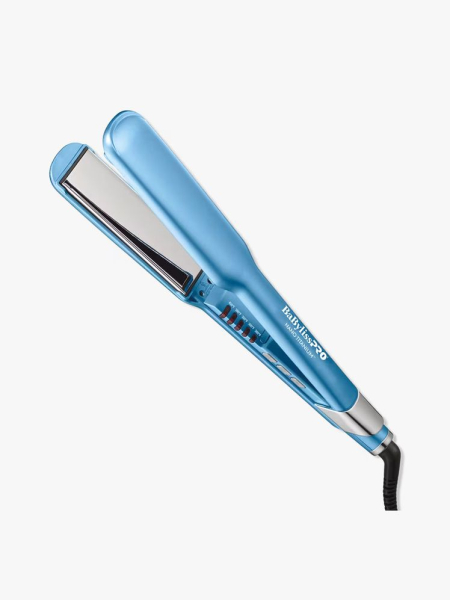
    Best for Textured Hair: BabylissPro Nano Titanium Ultra-Sleek Hair Straightener

    Blue and gray BabylissPro Nano Titanium Ultra-Sleek Hair Straightener on light gray backgroundSave to wishlistSave to wishlist

    BabylissPRO

    Nano Titanium Ultra-Sleek Straightener

    $100

    Amazon

    $100

    Nordstrom

    $100

    Ulta Beauty

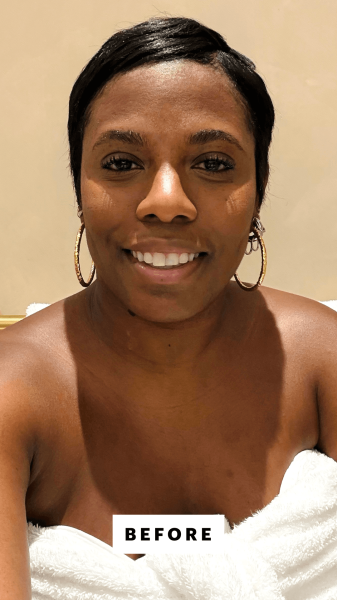
    Allure creative director Amber Venerable using the BabylissPro Nano Titanium Ultra-Sleek Hair Straightener

    Amber Venerable

    Why it's worth it: For thick, coarse, or textured hair, “it’s important to use a straightener with a titanium base rather than ceramic,” says Amerah Underwood, a hairstylist based in New York City. That's because titanium heats up faster and maintains a more consistent temperature throughout styling, while ceramic can lose heat with repeated passes—a key distinction, as coarse or kinky hair often requires higher temperatures (350 to 450°F) to straighten effectively. BaBylissPro’s Nano Titanium Ultra-Sleek Hair Straightener has extra-long titanium plates that conduct high heat quickly, enabling it to smooth hair in a single pass, she says. If you want a tool that can also create curls and waves, Underwood recommends the BaBylissPro Nano Titanium Prima Ionic Hair Straightener, which pairs the same titanium plates with rounded edges and a heated outer housing that lets you wrap hair around it much like a curling iron.

    Allure creative director Amber Venerable before using the BabylissPro Nano Titanium UltraSleek Hair Straightener

    Venerable before using the BabylissPro Nano Titanium Ultra-Sleek Hair Straightener

    Amber VenerableAllure creative director Amber Venerable after using the BabylissPro Nano Titanium UltraSleek Hair Straightener

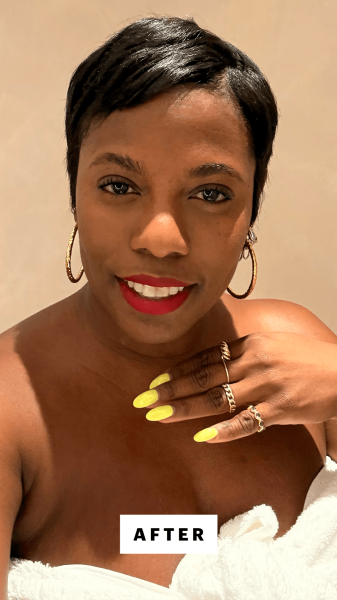
    Venerable after using the BabylissPro Nano Titanium Ultra-Sleek Hair Straightener

    Amber Venerable

    Tester feedback from creative director Amber Venerable

    AccordionItemContainerButtonLargeChevron

    “Because I have a short pixie, I love that BabylissPro in general has varying small sizes in flatirons that can grab my hair and give me the light curls I desire. This flatiron is also tried-and-true with every hairstylist I've ever had, so I feel like I can maintain my salon look easily days later." —Amber Venerable, creative director

    More to know

    AccordionItemContainerButtonLargeChevron

    • Plate material: titanium
    • Plate sizes: ½", 1", 1½", 2"
    • Heat settings: 50 adjustable settings, up to 450°F
    • Cord length: 9 ft.
    • Who it’s for: anyone with thick, coarse, curly, or tightly textured hair who wants sleek, straight results with fewer passes
    • Auto shut-off: no

    Best for Damaged Hair: T3 SinglePass StyleMax Flat Iron 1”

    T3 SinglePass StyleMax Flat Iron 1” in branded component on a light gray backgroundSave to wishlistSave to wishlist

    T3

    SinglePass StyleMax Flat Iron 1”

    $180

    Amazon

    $180

    Nordstrom

    $180

    Ulta Beauty

    Allure managing editor Alessandra Foresto using the T3 SinglePass StyleMax Flat Iron

    Alessandra Foresto

    If you can never remember the right settings for your hair type, the T3 SinglePass StyleMax takes the guesswork out of the equation. Simply select whether your hair is fine, medium, or coarse, and the tool's StyleMax technology automatically “pairs your hair texture with the right heat setting for maximum shine and smoothness with minimal heat exposure,” says Paulina. Even, consistent heat and slick CeraGloss ceramic plates mean fewer repeat passes—a major plus for damaged or color-treated hair—while the beveled StyleEdge design lets you get close to the roots without scalding your scalp, then glides smoothly through the lengths and ends without snagging. You’ll get a sleek, glossy finish with less frizz, less breakage, and far less opportunity to accidentally fry your strands.

    Alessandra Foresto before using the T3 SinglePass StyleMax Flat Iron

    Foresto before using the T3 SinglePass StyleMax Flat Iron

    Alessandra ForestoForesto after using the T3 SinglePass StyleMax Flat Iron

    Foresto after using the T3 SinglePass StyleMax Flat Iron

    Alessandra Foresto

    Tester feedback from managing editor Alessandra Foresto

    AccordionItemContainerButtonLargeChevron

    “I'm not exaggerating when I say I use this flatiron to create soft waves almost every single day (use heat protectant spray, kids!). I don't even own a curling iron anymore! It features a hair type setting that automatically heats up the flatiron to the right temperature for your hair type to straighten your hair, and a curling mode, which uses that hair type information to set the flatiron at the perfect temperature to curl your hair. Call it magic, but it does really heat up to the perfect degree, and it never feels like I'm scorching my hair. And it lives up to its name too—one pass is all you need! It's the one item I do not forget to pack when I travel!” —Alessandra Foresto, managing editor

    More to know

    AccordionItemContainerButtonLargeChevron

    • Plate material: ceramic
    • Plate sizes: 1”
    • Heat settings: 9
    • Cord length: 9 ft.
    • Who it's for: anyone who wants root-to-tip sleekness without searing their scalp in the process
    • Auto shut-off: 1 hour

    More flatirons we love:

    Best for Travel: Dyson Corrale Hair Straightener

    Dyson Corrale Hair Straightener in branded component on a light gray backgroundSave to wishlistSave to wishlist

    Dyson

    Corrale Hair Straightener

    $540 $440 (19% off)

    Amazon

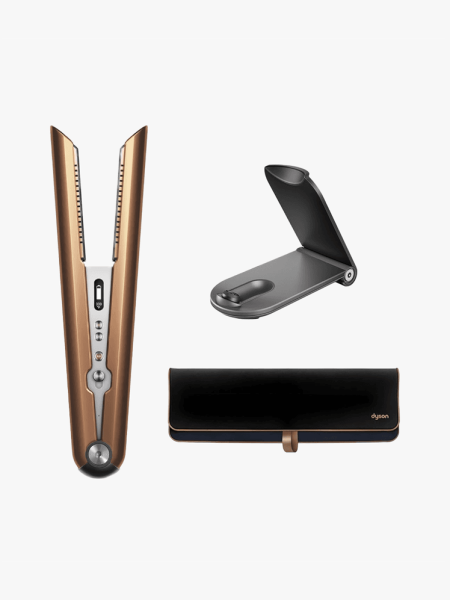
    Why it's worth it: If anyone were going to reinvent the travel flatiron, it would obviously be Dyson. Rather than relying on rigid plates, the Dyson Corrale features patented flexing manganese-copper plates that gently hug each section of hair for greater control, delivering sleek, shiny results with fewer passes and less heat damage than traditional solid-plate straighteners. When you're on the go, its cordless design offers up to 30 minutes of runtime on a full charge (with a handy LCD screen that lets you keep tabs on the battery), while universal voltage means it's ready for international trips with nothing more than a plug adapter. And for extra peace of mind when you’re on the go, the Corrale automatically enters sleep mode after five minutes of inactivity and shuts itself off completely after 10. The built-in battery makes the Corrale noticeably heavier (19.7 oz.) than many flatirons, but it's a worthwhile tradeoff if cordless styling and travel convenience are priorities.

    More to know

    AccordionItemContainerButtonLargeChevron

    • Plate material: manganese copper plates
    • Plate size: 1”
    • Heat settings: 3 (330°F, 365°F, 410°F)
    • Who it’s for: everyone, especially frequent travelers
    • Auto shut-off: sleep mode in 5 minutes; auto shut-off in 10 minutes

    Best for Frizz: Bio Ionic 10X Styling Iron

    Bio Ionic 10X Styling Iron in branded component on a light gray backgroundSave to wishlistSave to wishlist

    Bio Ionic

    10X Styling Iron

    $262

    Amazon

    Why it's worth it: If frizz is your biggest styling frustration, the Bio Ionic 10X Styling Iron features “sonic vibrating plates that minimize friction, so the iron glides effortlessly through hair,” says Murphy. The subtle vibrations also distribute heat more evenly across each section, so you can achieve smoother results with fewer passes—a win for reducing both frizz and unnecessary heat exposure. Meanwhile, the brand's Ion Generating Mineral Complex smooths the cuticle and retains moisture for sleeker, shinier strands. Murphy also appreciates the rounded shape, which "smooths baby hairs and lets you get as close to the roots as possible" for a polished finish.

    More to know

    AccordionItemContainerButtonLargeChevron

    • Plate material: ceramic
    • Plate size: 1”
    • Heat settings: adjustable up to 450°F
    • Cord length: 9 ft.
    • Who it’s for: anyone looking to reduce frizz and boost shine
    • Auto shut-off: 1 hour

    Best for Short Hair: Wavytalk Cool Curl Pencil

    Wavytalk Cool Curl Pencil in branded component on a light gray backgroundSave to wishlistSave to wishlist

    Wavytalk

    Cool Curl Pencil

    $69 $50 (28% off)

    Amazon

    $70 $48 (31% off)

    Wavytalk

    Why it's worth it: Attention, people with pixies, bobs, and fringe: The Wavytalk Cool Curl Pencil's slim 0.65-inch barrel delivers the precision you need to lift roots, tame textured hairlines, and perfect bangs without accidentally grabbing half your head of hair. "This iron is the perfect size for short haircuts to add volume and smooth out frizz," says Underwood. Even better, 104 air vents surround each section with 360 degrees of cool airflow as you style—think of it as the flatiron equivalent of a blow-dryer's cool-shot button. The cool air sets your style on the spot, so curls and bends last longer while reducing heat exposure, locking moisture into the hair shaft, and leaving strands less likely to look dry or overworked.

    More to know

    AccordionItemContainerButtonLargeChevron

    • Plate material: ceramic
    • Plate sizes: 0.65”
    • Heat settings: 5 (280°F, 320°F, 360°F, 390°F, 430°F)
    • Cord length: 6.5 ft.
    • Who it’s for: people with short hair or for styling bangs
    • Auto shut-off: 1 hour

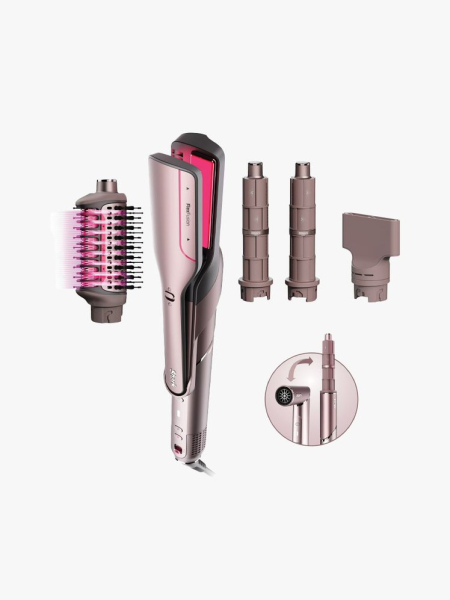
    Best Multi-Styler: Shark FlexFusion Air & Ceramic Styling System

    Image may contain: Electrical Device, and MicrophoneSave to wishlistSave to wishlist

    Shark

    FlexFusion Air & Ceramic Styling System

    $400 $320 (20% off)

    Amazon

    Ever wished your multi-styler had a straightening option? Well, Shark heard your call to action and created the FlexFusion Air & Ceramic Styling System, a multitasking device that comes with a hair straightening attachment. It combines ceramic plates with air-based technology to straighten your hair (even when damp!) without causing significant heat damage. When you don’t feel like using your straightener, you can swap it with one of the four other attachments this hair tool comes with, including curling wands and a blow-dryer brush. “If you want one tool that does it all, this is a great way to cut down on clutter while getting the versatility of multiple styling tools,” says Michele Joseph, a hairstylist based in New Jersey.

    More to know

    AccordionItemContainerButtonLargeChevron

    • Plate material: ceramic
    • Plate size: 1”
    • Heat settings: 5
    • Cord length: 9 ft.
    • Who it's for: anyone who wants a multi-styler for a variety of looks
    • Auto shut-off: unknown

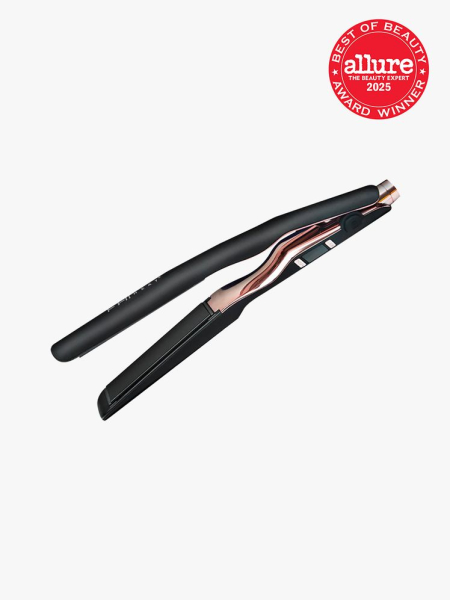
    Best Curling: FHI Innovator The Curve Pro Styling Iron 1”

    FHI Innovator The Curve Pro Styling Iron 1” in black and rose gold color way on light gray background with red Allure Best of Beauty seal in the top right cornerSave to wishlistSave to wishlist

    FHI Heat

    Innovator The Curve Pro Styling Iron 1”

    $200

    Walmart

    Why it's worth it: In the latest round of our Allure Best of Beauty Awards, the FHI Innovator The Curve Pro Styling Iron 1” nabbed a win as our favorite flatiron. As its name suggests, this ceramic-based flatiron has a curved build that takes tension off of both your strands and wrist, making the chore of flatironing your hair surprisingly easier. Along with its ergonomic design, we also love its slender tourmaline ceramic plates, which heat from 265°F to 450°F in just 10 seconds.

    Tester feedback from senior copy manager Leslie Lipton

    AccordionItemContainerButtonLargeChevron

    “The sleek shape of the FHI Innovator The Curve Pro Styling Iron 1” makes flatironing my bob a breeze. The tourmaline ceramic plates heat in seconds and glide through hair, turning my flyaway frizz and unruly waves into smooth, reflective shininess." —Leslie Lipton, senior copy manager

    More to know

    AccordionItemContainerButtonLargeChevron

    • Plate material: ceramic
    • Plate size: 1”
    • Heat settings: 265°F to 450°F
    • Cord length: 9 ft.
    • Who it's for: anyone who wants to relieve tension from their wrists and strands
    • Auto shut-off: 1 hour

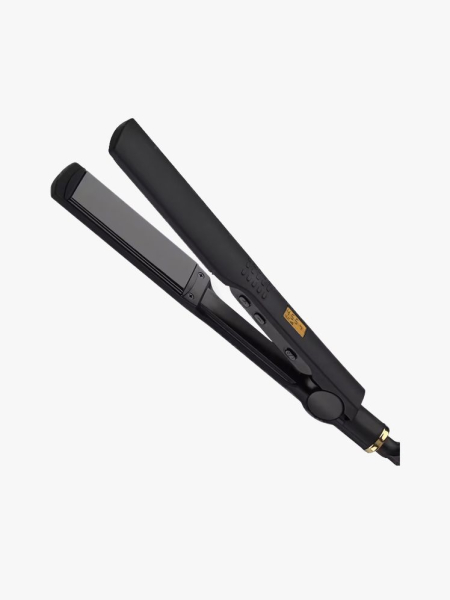
    Best for Long Hair: Hot Tools Professional Black Gold Digital Flat Iron

    Hot Tools Professional Black Gold Digital Flat Iron ion branded component on a light gray backgroundSave to wishlistSave to wishlist

    Hot Tools

    Professional Black Gold Digital Flat Iron

    $150 $73 (51% off)

    Amazon

    If you have long, thick hair, every extra pass with a flatiron adds up. The Hot Tools Professional Black Gold Digital Flat Iron speeds things along with 1.25” plates that cover more surface area so that you can straighten larger sections at once. Its ceramic plates are infused with tourmaline and magnesium to lock in moisture and tame frizz, while proprietary HydraHeat Technology releases negative ions that leave hair looking noticeably shinier and silkier. For the impatient (or anyone who's already running late), it heats from 265°F to 450°F in just 10 seconds, so it's ready before you've even finished sectioning your hair. “It’s great at quickly straightening the hair while maintaining its shine and soft feel,” Miguel Luis, a hairstylist based in New York City, attests.

    More to know

    AccordionItemContainerButtonLargeChevron

    • Plate material: hybrid (ceramic and titanium)
    • Plate sizes: 1”, 1.25”
    • Heat settings: adjustable up to 455°F
    • Cord length: 9 ft.
    • Who it's for: anyone with thick or long hair who wants a quicker styling experience
    • Auto shut-off: 2 hours

    Frequently Asked Questions

    Are hair straighteners safe for my hair?

    You may be wary of using high heat on your hair, but hair straighteners are perfectly safe when used correctly. "The key is to use them on dry hair and ideally as a finishing tool. I typically recommend smoothing with a round brush before straightening. Always apply a heat protectant before styling to shield your strands from high temperatures," says Los Angeles- based hairstylist Joseph Maine. “Also, it's important to keep the flatiron clean to ensure it heats evenly and doesn't snag your hair.”

    How do I minimize heat damage from my straightener?

    Heat damage is avoidable with the right high-quality tool and prep routine. Sure, there are tons of flatiron options out there, and some are lower in price than others. But what you don’t pay in money, you might pay in results, as low-quality heated tools (regardless of their price tag) can quickly lead to scorched strands and breakage. When it comes to a searing-hot device you’re sandwiching your delicate strands between, it’s worth investing in quality.

    What makes a hair straightener stand out? Here’s the gist: You’ll want a device with multiple heat settings to suit your hair type and plates made of ceramic, titanium, or a mix of both.

    Beyond the tool you’re using, every hairstylist we chatted with agreed that the most important part of preventing heat damage is using a heat protectant. “I tell all my clients to think of it as a lightweight shield that keeps the cuticle sealed while the heat does its work,” says Kaprisha Gipson, a New York City-based hairstylist. A heat protectant creates a barrier over your strands and adds slip between your hair and heated plates to help prevent moisture loss and keep your hair from becoming brittle from exposure to extremely high temperatures.

    New York City-based hairstylist Devin Toth suggests avoiding passing over the same section of hair. “It's better to go over it once, slowly,” he explains. “People tend to have more damage in their face-framing area of hair because they hit it with the iron too many times to get it just right." Another key to safely straightening is to be mindful of your flatiron's temperature. According to Toth, the optimal temperature to avoid burning is 365 degrees Fahrenheit, but it truly depends on your hair type and needs. “Fine hair generally needs much less heat than coarse hair or curly textures,” says Eddie Parra, a hairstylist based in New York City.

    How do hair straighteners work?

    "Flatirons work by using heated plates to temporarily alter the structure of your hair, making it straight," says Maine. "When you apply the heated plates to your hair, the heat breaks down the hydrogen bonds in the hair's cortex, causing it to straighten. Once your hair cools down or gets wet, these bonds reform, and your hair goes back to its natural state," Maine adds that varying materials like ceramic, titanium, or tourmaline have different effects on the heat distribution and speed of the straightening process.

    What are the differences between ceramic and titanium plates?

    These two materials are both effective at straightening hair, which is why they’re the most popular options for flatiron plates, but each caters to different needs. According to all the stylists we spoke with, ceramic is the gentler of the two, making it suitable for all hair types, especially fine or fragile strands. “Ceramic plates reduce the risk of hot spots that can burn the hair,” notes Parra.

    As for titanium, these plates do provide quicker, straighter results, but their heat can make them too intense for finer hair types. “Titanium plates deliver smooth and shiny hair that is noticeable under any lights; they deliver heat very quickly, and usually a professional would use these types of straighteners,” explains Luis. Overall, we recommend titanium plates for those who have thicker hair types that are more resilient to heat damage.

    How should I choose a hair straightener?

    Picking a hair straightener is a personal choice and largely depends on your hair type and styling desires. "For fine or damaged hair, look for a flatiron with adjustable heat settings to prevent overheating—ceramic plates are great for even heat distribution without getting too hot," Maine tells Allure. He adds that if your hair is on the thicker or coarser side, a hair straightener with titanium plates is ideal because they "can handle higher heat and manage frizz more effectively."

    Toth explains that plate size and shape are key to selecting a hair straightener. "The wider the plate, the straighter the hair will look. So if you like to really bend and bevel the ends of your hair, then choose a narrower plate," says Toth. Maine echoes Toth, explaining that a "wider plate can straighten more hair at a time, which is useful for thicker hair, while a narrower plate is better for short hair, detailed styling like bangs, or achieving specialized styles like flatiron waves or curls.

    According to Maine, you should also consider the type of plate edges featured on a hair straightener before making your purchase. "If the plates of the flatiron are slightly protruding out of the iron and the edges of the plates are beveled, then you will be able to effortlessly make curls with this tool," he states. "If the plates are not protruding with beveled edges, then the iron is mainly designed for straightening hair."

    Meet the experts

    • Kaprisha Gipson, a New York City-based hairstylist
    • Michele Joseph, a hairstylist and founder of Seam and Strand based in New Jersey
    • Miguel Luis, a hairstylist at Rita Hazan Salon in New York City
    • Joseph Maine, a hairstylist and founder of Trademark Beauty based in Los Angeles
    • Taylor Murphy, a hairstylist based in Raleigh, North Carolina
    • Eddie Parra, a hairstylist at Benjamin Salon New York in New York City
    • May Paulina, a hairstylist based in Florida
    • Devin Toth, a hairstylist at Salon SCK in New York City
    • Amerah Underwood, a hairstylist and founder of Umi Salon based in New York City

    How we test and review products

    We always enlist a range of testers for any review, but hair-care products and tools are another story. While some can be used across different hair textures, lengths, curl patterns, thicknesses, colors (natural and unnatural), and concerns, many are created with specific consumers and their needs in mind. When reviewing tools, we also take into account testers’ experience levels. For instance, an innovative new blow-dryer may feature industry-leading technology, but if the only people who find it intuitive to use are professional hairstylists, we have to consider this when determining whether it is worthy of a recommendation.

    For our review of the best hair straighteners, we enlisted the help of multiple editors, writers, contributors, and hair stylists with varying hair types and desired styling outcomes, and whether one product was tested across multiple hair types. Testers considered performance across three primary categories: efficacy, safety, ease of use, and value. For more on what's involved in our reporting, check out our complete reviews process and methodology page.

    Our staff and testers

    A beauty product is a personal purchase. You might be searching for a face cream to address persistent dryness or a new nail product to add to your Sunday self-care routine; you may simply be browsing around for the latest launches to hit the hair market. No matter what you seek or your individual needs and concerns, Allure wants to ensure that you love anything we recommend in our stories. We believe that having a diverse team of writers and editors—in addition to the wide range of outside testers and industry experts we regularly call upon—is essential to reaching that goal.

    After all, can we really say a skin-care product is the "best" for people over 50 if the only testers we’ve solicited opinions from folks who have yet to hit 30? Can we honestly deem a high-end diffuser worthy of your hard-earned cash if it’s never been tested on curls? We're proud that our staff spans a wide range of ages, skin tones, hair textures, genders, and backgrounds, which means that we are able to fairly assess any beauty product that comes into the beauty closet.

  • Is Oral Minoxidil a $10 Hair Loss Cure?

    Is Oral Minoxidil a $10 Hair Loss Cure?

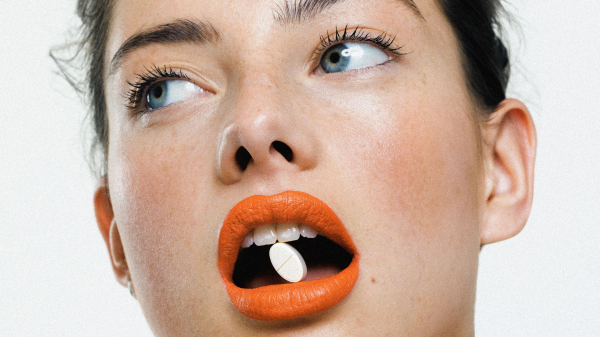
    A woman wearing orange lipstick who is about to swallow a white pillPhoto: Sabine Villiard / Trunk ArchiveSave StorySave this storySave StorySave this story

    Many of us can pinpoint the moment when our hair loss became irrefutable—when we could no longer normalize or rationalize the fallout. For me, it was March of 2019. I’d just turned 42 and was in Washington, DC, for a dermatology conference. I remember standing before a full-length mirror, deciding between slingbacks and boots, when the stark visibility of my scalp stole my focus. In an instant, the hotel lighting rudely exposed a truth I’d been denying for months: My hair was falling out.

    Looking back, it’s obvious. The intense shedding, the soaking night sweats, the chronic insomnia—I was in perimenopause. But this was before the rise of Mary Claire Haver and the social media menoverse. I was clueless about menopause and assumed it was years off. I mean, I’d only stopped nursing my youngest a few years prior. I chalked up my symptoms to advancing age and my on-again, off-again relationship with the Pill, and tried to ignore the hair collecting in my brush. I continued to shed (slowly, steadily) throughout my 40s, but generally avoided dealing with it, save for a false start on Nutrafol and a few relatively unproductive rounds of platelet-rich plasma (PRP). The evidence-backed injections, which rely on the growth factors in our blood to stimulate hair growth, demanded more maintenance (booster treatments every six months) than I could manage. And each session can cost around $1,000.

    Why didn’t I do more? Well, to the average passerby, my hair, which is long and dark, probably doesn’t appear to be thinning. I don’t have the telltale Christmas-tree part, and my scalp is still fairly well concealed overall. But if I had to guess, based on my cumulative fallout and the comparative density of my ponytails and braids, I’d say that, at 49, I’ve probably lost about half the abundance of hair I had in my 20s. I notice it’s thinner and it worries me, but I probably would’ve been more proactive about treatment if the sparseness were obvious to the world.

    Also, in my defense, female hair loss wasn’t fully in the zeitgeist back in 2019. Most women weren’t baring their scalps on Instagram or swapping growth hacks at cocktail parties. It wasn’t until the confluence of the COVID pandemic and the GLP-1 boom set off a veritable hair loss epidemic that we saw a wave of content and conversation devoted to it—more specifically, telogen effluvium, a temporary type of shedding spurred by emotional or physical stressors (including pregnancy, illness, rapid weight loss, and global lockdowns). But even then, many of the hair loss stories reported in the early days of the pandemic—like this one in Allure and this other one in The New York Times and yet another one in The Atlantic—made no mention of oral minoxidil, a drug that’s now considered a go-to for thinning hair. Dermatologists weren’t collectively touting it—not until 2022, at least, when the widely read New York Times article, “An Old Medicine Remedies Hair Loss for Pennies a Day,” officially put oral minoxidil on the public radar.
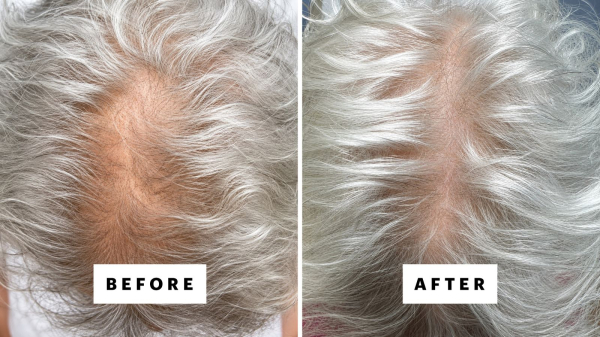
    Image may contain Blonde Hair Person Adult Head Face Photography and Portrait

    A patient of Dr. Oma Agbai before and after 10 months on oral minoxidil.

    I remember reading the piece, but for whatever reason—kids, deadlines, a slow shedding month—it didn’t immediately compel me to seek a prescription. I think I knew oral minoxidil was a thing, but at the time, the idea of taking a pill for hair loss just felt like a lot. Then I went on menopause hormone therapy (or MHT, which is the rebrand of HRT or hormone replacement therapy) and my perspective completely shifted.

    When talking to doctors and friends who were also navigating estradiol patches, progesterone pills, and testosterone gels in an effort to address the symptoms of menopause, oral minoxidil frequently found its way into the conversation. It seemed to be the drug of choice for middle-aged women with hair loss. Whether I was peer-pressured or influenced, who knows? But one day this past spring, just after turning 49, I was chatting with a nurse practitioner at Midi Health (my longtime ob-gyn had just retired and I needed quick advice on adjusting my estradiol dose) and asked if she could prescribe minoxidil to slow my shedding, which had intensified after my periods officially stopped months prior. She obliged, without hesitation.

    While there has been a lot of buzz about this hair loss pill, for once the hype isn’t outpacing the science. “Social media has certainly amplified awareness [of minoxidil]—and reduced some of the stigma that has historically prevented women from seeking help [with hair loss]—but the enthusiasm is also being driven by growing scientific evidence,” says Oma Agbai, MD, the founding director of multicultural dermatology and hair restoration at the UC Davis School of Medicine in Sacramento, California. “Over the last 5 to 10 years, there’s been an explosion of clinical studies demonstrating its efficacy and safety at low doses.” Not only is oral minoxidil “one of the biggest advances in hair loss treatment in the past decade,” she says, but it’s also one of the most commonly prescribed medications at her hair clinic.

    For once, the hype isn’t outpacing the science.

    Anna Karp, DO, a board-certified dermatologist in New York City, estimates that 30 to 40% of her female hair loss patients are currently taking oral minoxidil or discussing it as an option. She took it herself for a while to counter postpartum shedding after the birth of her second child. In recent years, she says, women have become “more attuned to their hair and are quicker to seek help” when they experience shedding.

    Of course, you don’t need to visit a dermatologist for a minoxidil prescription, given the proliferation of internet pharmacies, notes Robert Finney, MD, a board-certified dermatologist in New York City. While some doctors worry about the lack of personalized counseling offered online, they say telehealth has helped mainstream minoxidil by broadening access. For me, it was easy and affordable to get an appointment and prescription through Midi, the menopause-focused platform. My insurance covered the 30-minute call, and I paid less than 10 bucks for the pills. Libby Windsor, 50, a friend of a friend, got oral minoxidil through Strut Health after dropping 20 pounds on a GLP-1 and realizing months later, “I could see through my hair.” (Was it because of the weight loss? Was it just aging? Perimenopausal hormone fluctuation? She thinks probably all of the above.) Allure contributor Marci Robin, 47, says her foray into oral minoxidil took the form of green apple gummies from Hers. She eventually upgraded to the traditional tablet, at a higher dose, prescribed by her dermatologist. The bottom line, according to board-certified dermatologist (and taker of oral minoxidil) Shereene Idriss, MD: “Oral minoxidil has become more mainstream because, very simply, it works.”

    How does oral minoxidil work?

    In 1979, the US Food and Drug Administration (FDA) approved oral minoxidil, a vasodilator, not to reverse balding, but to reduce blood pressure. When patients started seeing hair growth as a side effect of the medication, drug makers got to work developing a topical version for the scalp. In 1988, it was approved for male pattern hair loss (or androgenetic alopecia) and marketed as Rogaine. The agency approved the same solution for women in 1992—and it remains the only FDA-approved medication for female pattern hair loss.

    Decades later, in the mid-2010s, dermatologists began investigating oral minoxidil for hair loss, using smaller doses than those known to affect blood pressure. “The doses for hair are much lower—0.25 to 2.5 mgs in women—and cardiovascular effects are generally minimal at those doses,” says Dr. Karp. “I like to start at half a pill (1.25 mgs) and will sometimes titrate up to one pill (2.5 mgs) a day if there are no side effects. Others may start at 0.25 mgs and go up.” Using oral minoxidil to treat hair loss is considered an off-label use, since the FDA has never approved the drug for this indication in men or women.
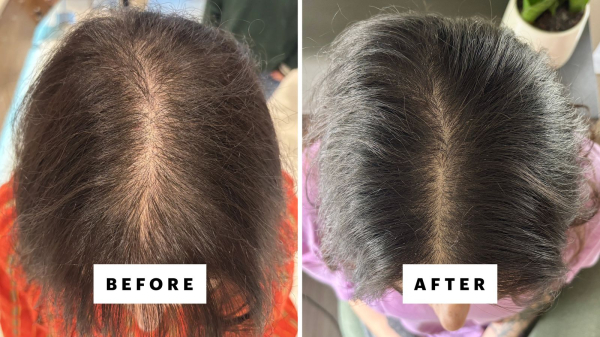
    Image may contain Head Person Face Child and Hair

    Allure contributor Marci Robin before and seven months after starting oral minoxidil.

    So how, exactly, does a blood pressure medicine grow hair? Whether taken by mouth or rubbed on the scalp, minoxidil causes blood vessels to widen by relaxing the smooth muscle cells within their walls. This increases blood flow and enhances the delivery of nutrients and oxygen to the hair follicles. While minoxidil’s myriad mechanisms of action haven’t been completely borne out, “we know its hair-growth benefits extend far beyond circulation alone,” Dr. Agbai says. “It keeps hair follicles in the active growth phase for longer, it enlarges follicles that have become miniaturized over time, it stimulates follicle activity, and it increases the production of growth factors that support healthy hair growth.” All told, she adds, “these effects help follicles produce thicker, fuller hairs and can improve overall hair density.”

    While you might assume, as I did, that the prescription pill is stronger than the over-the-counter topical foam, “head-to-head studies have shown that low-dose oral minoxidil is actually roughly comparable to, and in some analyses, modestly superior to topical 5% minoxidil,” Dr. Karp says. In practice, however, many dermatologists find that the pill ultimately works better, because “it bypasses the practical issues we see with topical formulations,” says Dr. Idriss. Foams can be hard to apply uniformly. They may be sticky or slick, leaving hair limp, stringy, and dirty-looking. They can irritate the scalp, causing itching, stinging, dryness, and flaking.

    When Dr. Idriss saw her hair thinning after having her first child, she picked up a minoxidil foam. “It worked, but I developed a sensitivity to it,” she says. “My scalp started flaking to the point where it looked like I had really bad dandruff. I just couldn’t tolerate it.” She’s not alone: In a study looking at levels of compliance to topical minoxidil among people with androgenetic alopecia, 86% discontinued the treatment; the rate jumped to 93.6% when subjects experienced side effects. Conversely, trials involving people on low-dose oral minoxidil show that fewer than 2% discontinue treatment for any reason. Dr. Idriss eventually transitioned to oral minoxidil and has now been on it for 18 months. “Its biggest advantage is not that it’s dramatically more effective,” she reiterates. “It’s just so much easier to use consistently. And consistency and adherence matter. That’s what makes medicine work.”

    Does oral minoxidil work for all kinds of hair loss?

    Yes, with a caveat: “Minoxidil is going to act as a stimulator to jump-start growth regardless of what’s causing the hair loss,” says Dr. Idriss, but it’s not going to remedy the underlying problem, nthe thing that made your hair fall out in the first place, be it a hormonal imbalance, an autoimmune condition, a nutritional deficiency, or a dysfunctional thyroid. For the best long-term outcome, you need to stimulate growth with minoxidil while also addressing what’s behind the shedding. Which is why some doctors, when evaluating hair loss, will order labs to root out common instigators, like anemia or low vitamin D or ferritin (a protein that stores iron).

    Marci, my fellow Allure contributor, assumed her hair loss was a mere consequence of aging until her rheumatologist linked it to an autoimmune condition called Sjögren’s syndrome. “I have a weird version of it that presents neurologically,” she says. “And as with most autoimmune diseases, it comes with the risk of your body attacking your hair follicles.” For the past seven months, she’s been taking 2.5 mgs of minoxidil. She didn't see tremendous growth in the first few months (“though it was enough to ease my mind a little bit”), and then around month five, “I realized I was no longer afraid to run my fingers through my hair. It was thicker all over, and my part had almost completely filled in.”
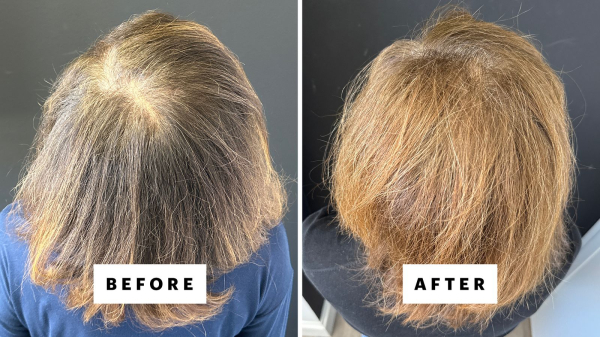
    Image may contain Adult Person Head Face and Hair

    A patient of Dr. Amelia Hausauer before and 20 months after starting oral minoxidil. This patient also did three monthly PRP treatments, and now does a maintenance session once every six months. (Many people taking oral minoxidil are also pursuing at least one other hair loss treatment, at least initially, to both expedite and maximize their results.)

    Because “oral minoxidil works best when there are still viable follicles capable of producing hair,” Dr. Agbai says, it’s a go-to for temporary “non-scarring” kinds of hair loss, including telogen effluvium (the abrupt shedding that can follow a stressor, like surgery or weight loss), certain types of alopecia areata (an autoimmune disease), and hereditary pattern hair loss, which is marked by a sensitivity to dihydrotestosterone (DHT), a hormone that causes follicles to shrink over time. (DHT is a derivative of testosterone; both are classified as androgens, or male sex hormones, but women make them too.) Dermatologists may also prescribe oral minoxidil (alongside other medications) when treating permanent or “scarring” forms of hair loss caused by autoimmune issues, infections, or trauma. In such cases, “Minoxidil is not going to reverse the course of scarring, but it is going to help strengthen and regrow hairs” around areas of concern, says Dr. Finney. “It truly is a Swiss Army Knife.”

    “It’s just so much easier to use consistently. And consistency and adherence matter. That’s what makes medicine work.”

    The drug’s versatility is a virtue, especially for female hair loss, which is almost always multifactorial, says Dr. Karp. While women most commonly present with androgenetic alopecia, “layered on top of it, you may have an iron deficiency (ferritin is often the culprit), thyroid dysfunction, significant physical or emotional stress triggering telogen effluvium, hormonal shifts, restrictive eating, or medications,” she says. One of those medications is increasingly likely to be a GLP-1. Weight loss can cause hair shedding and thinning, and according to one 2025 survey, 15% of women from 30 to 49 and 20% of women from 50 to 64 are taking or have taken a GLP-1. I would imagine those numbers are even higher today. Rarely is a single factor to blame, though.

    One exception: chemotherapy-induced hair loss. After being diagnosed with an aggressive form of breast cancer during the pandemic, 39-year-old Amy* underwent eight rounds of chemo, two lumpectomies, and 25 radiation treatments. Her hair began to fall out after the second round of chemo; her brows and lashes hung on until a week after her final session. Ultimately, she lost about half the hair on her head; she credits cold capping with preserving what remained. Though she had a sizable bald patch on top of her head (likely from where the cap broke contact with her scalp), “headbands kind of concealed it,” she says, and since she still had hair in the front, “on Zoom, my coworkers couldn’t tell that I’d lost any hair at all.”

    Still, her hair loss was an everyday reminder of her illness. “I was lucky I didn’t feel the chemo that much, but seeing my hair go was hard,” she says. “It’s so closely tied to identity.” Her surgeon referred her to a dermatologist, who started her on oral minoxidil as soon as she was done with chemotherapy. Within weeks, she saw her bald spot filling in and her brows and lashes coming back. Now, five years later, she says, “I have the thickest hair I’ve ever had in my life.” She still takes half a pill a day, per her dermatologist’s advice, mainly because the medications she’s on long-term to prevent the cancer from recurring all cite hair loss as a potential side effect.

    Why does everyone seem to have (peri)menopausal hair loss?

    Female pattern hair loss strikes approximately 40% of women by their 50th birthday, dovetailing, in many cases, with menopause. “While there are a couple of hormonal culprits behind female hair loss, the most important is DHT, which can basically shrink the hair follicles, causing them to come back finer and thinner,” explains Mona Mislanker, MD, a board-certified dermatologist in Cincinnati. As women produce testosterone, in the ovaries, adrenal glands, and other tissues, a portion is converted to DHT, which attaches to receptors in the hair follicles, causing the hallmark shrinkage seen in pattern hair loss. (The follicles of those prone to the condition are hypersensitive to DHT.)

    Polly Blitzer Wolkstein, a 50-year-old beauty editor and brand consultant, noticed her hair thinning in her 40s when she “suddenly needed to wrap a ponytail holder three times instead of two.” Like many of her contemporaries, she blamed it on the stress of the pandemic. After experimenting unsuccessfully with supplements and her husband’s Rogaine, she met with a dermatologist, who reviewed her bloodwork (everything was normal) and examined her scalp (there was evidence of “miniaturized” follicles). Polly was ultimately diagnosed with androgenetic alopecia. Along with oral minoxidil (at 0.625 mgs), her dermatologist prescribed a small dose of spironolactone, a so-called antiandrogen, to directly address the hormonal component of her hair loss. In cases like Polly’s, spironolactone can enhance hair growth “by blocking androgen receptors and making it harder for DHT to bind with and exert its effects on the hair follicles,” says Dr. Idriss. Doctors often combine it with oral minoxidil because the two drugs do different jobs, each acting on the follicle in its own way to synergistically reduce shedding and yield greater growth.

    In patients with hormonal hair loss, dermatologists may enlist an antiandrogen when hair loss seems unusually aggressive or slow to respond to minoxidil alone. “If a patient is on oral minoxidil for six months and we’re not seeing a good enough response, I might consider adding another medication, like spironolactone or finasteride or dutasteride, but it’s not a one-size-fits-all thing,” says board-certified New York City dermatologist Ellen Gendler, MD, who takes oral minoxidil herself to help with postmenopausal hair loss.

    While spironolactone blocks androgen receptors, finasteride and dutasteride work by inhibiting the enzyme that turns testosterone into DHT, effectively “shutting off the production of the hormone that’s driving the follicular demise,” says Dr. Finney. Since finasteride and dutasteride pose a risk of birth defects, dermatologists generally reserve them for men and postmenopausal women. In female patients who still have regular periods, Dr. Finney will sometimes use microneedling and ultrasound to deliver sterile dutasteride directly into the scalp. This way, he can reap the benefits of dutasteride while skirting systemic side effects.
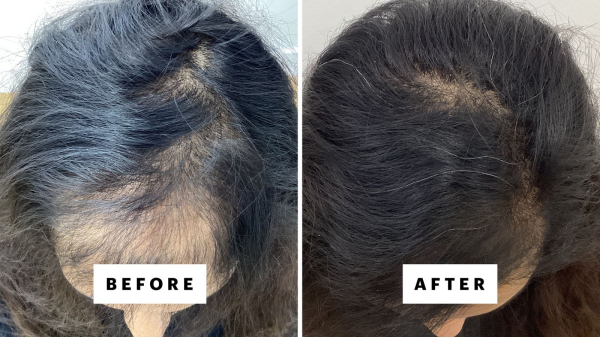
    Image may contain Adult Person Head Hair and Face

    A patient of Dr. Robert Finney before and 16 months after starting oral minoxidil plus five ScalpStim treatments (dutasteride and growth factors delivered to the scalp through microneedling and ultrasound).

    Before reporting this story, what confused me most about middle-aged women losing hair to androgenetic alopecia was that so many of us report low levels of testosterone—the very hormone that gives rise to DHT and sparks the condition. Like other hormones, testosterone dwindles with age, threatening not only libido, but also perhaps musculoskeletal health, mood, and more, though the jury is still out there. A libido boost alone, though, is enough for the throngs of women on social clamoring for the drug. But if menopausal women generally have so little T (and presuming they’re not treating the deficiency with excessive doses), then why are their follicles behaving like those of juiced-up gym bros?

    “One of the biggest misconceptions is that you need high testosterone to lose hair,” Dr. Idriss explains. “So many menopausal women with androgenetic alopecia have completely normal or even low levels of testosterone.” Amelia Hausauer, MD, a board-certified dermatologist in Campbell, California, says the same thing: In some postmenopausal women, female pattern hair loss can develop or progress despite lab work showing low testosterone levels. “What’s happening systemically in the body and what’s happening locally at the hair follicle are two different things,” she says. Even if there’s scant testosterone in the blood, the follicles can become more sensitive to androgens, responding in dramatic fashion. Dr. Hausauer links the heightened sensitivity to an increase in both the expression of androgen receptors in the follicles as well as an uptick in the enzyme that changes testosterone into DHT, “which means that even low or declining circulating testosterone can be converted to the more potent DHT within the follicle.”

    Waning estrogen exacerbates the situation. In youth, “estrogen is your hair’s best friend: It keeps hair in the growth phase longer, it supports a healthy follicle, and it acts as a natural counterbalance to androgens within the follicles,” Dr. Idriss says. “But as estrogen declines in menopause, that protective effect fades and you’re left with a state of relative androgen dominance.” Again, it’s not that your androgen levels are high; there’s just less estrogen around to offset them. Contributing to the imbalance is aromatase, yet another wizardly enzyme in our hair follicles. This one transforms androgens into beneficial estrogens, but “it seems to be decreased in the affected scalps of women with pattern hair loss,” notes Dr. Hausauer. But presumably if you’re on menopause hormone therapy, that estrogen will prevent a lot of this potential hair loss, right? Unfortunately wrong: "MHT may help soften the hormonal drop that can contribute to shedding, but it does not reliably prevent or treat female pattern hair loss," says Dr. Idriss.
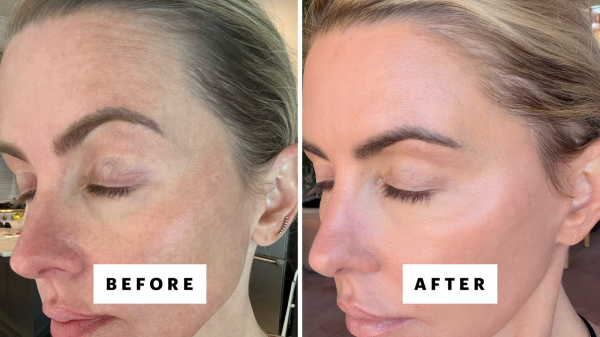
    Image may contain Accessories Earring Jewelry Head Person Face and Adult

    Melissa Coleman (@mrs.derm) before and nine months after starting oral minoxidil.

    Long story short: “When helpful hormones bottom out and androgens go unchecked, genetic hair loss gets unmasked,” Dr. Finney says. But it’s a gradual process, so you may not notice it right away. “It's not, ‘My hair just fell out,’” notes Dr. Idriss. “It's, ‘My ponytail feels thinner.’ ‘I can see my scalp more.’ ‘My hair isn't what it used to be.’”

    Marci can relate. “I never paid much attention to how much hair was in the brush or going down the drain,” she says. “What made me nervous was how much I could see my scalp.” For others, the loss may not register until even later. When Melissa Coleman, the 47-year-old beauty consultant better known as @mrs.derm, started taking oral minoxidil in advance of her tummy tuck, she was simply hoping to stave off post-op shedding. “I didn’t even notice that I had been losing my hair until I saw all this new growth coming in,” she says. “Mushroom head,” she calls it. “I suddenly had two inches of new hair sprouting all over my scalp.”

    What are the side effects of oral minoxidil?

    Nearly every woman I spoke to for this story has experienced the minor side effects of oral minoxidil—most commonly, excess hair on the face or body. “While studies suggest that maybe 35 to 50% of people get hair on their face, in my office, it’s 90%,” says Dr. Gendler. Still, she says, “it’s rare for a woman to tell me, ‘I can’t deal with the facial hair. I’m going off of minoxidil.’” Dr. Gendler’s experience aligns with the findings of a 2026 study of patient-reported side effects. In women taking low-dose oral minoxidil, 71.6% reported unwanted hair growth, mostly on the face, arms, and legs; 93.2% continued to take the drug.

    For some, this side effect is subtle: a little extra peach fuzz along the jawline. For others, not so subtle: Dr. Idriss didn’t realize the magnitude of her facial hair until she saw a photo of herself, blown up and unretouched, in a Sephora storefront. (Her skin-care line, Dr. Idriss, is sold there.) “I was like, ‘Uh, why do I have a beard?’” Other women shared similar (albeit less cinematic) stories of hair erupting in unexpected places. Melissa and Marci, for instance, discovered newfound knuckle hairs. “So, I guess we’re shaving our fingers now,” Melissa jokes. Polly noticed dark fur blooming on her temples. It looked very “woodland creature,” she says, particularly in her lighted magnifying mirror. She now routinely dermaplanes her face and plucks any rogue hairs. “It’s been ongoing but manageable,” she says. “Worth the trade-off.”

    71.6% reported unwanted hair growth, mostly on the face, arms, and legs; 93.2% continued to take the drug.

    Indeed, most women find they can easily manage unwanted hair with dermaplaning or laser hair removal. But if it’s extreme or bothersome, doctors can pair oral minoxidil with spironolactone to control the excess hair growth. In a 2026 study, combining the two decreased the risk of unwanted body hair by about 65%, or they can reduce the daily dose of minoxidil to curb side effects. “The goal is to find the lowest effective dose that gives you the most meaningful hair regrowth without causing crazy side effects,” says Dr. Idriss, who started doing laser hair removal after she saw that Sephora photo.

    Out of the nine women who’ve taken oral minoxidil that I spoke to for this story, only one was among that 6.8% who quit because of the unwanted hair growth. “My whole face was just… furry,” says Vanessa*, 50, who started taking oral minoxidil early this year to regrow her hair after frying much of it off in an attempt to bring her dark hair to a more gray-concealing blonde. She got her 1.5 mgs prescription from the telehealth company Hers and by week four, was thrilled that she was already noticing thicker hair on her head. But by week eight, the hair on her cheeks (“my facialist asked me if I shaved my face because I had a layer of hair on it that was all exactly the same length”) and her newly bushy brows (“I’d never had to groom my brows in my life”) were too much; she quit. “I wanted fuller hair, but it wasn’t worth having a hairy face and adding brow-threading and mustache-bleaching to my list of beauty upkeep,” she says. Vanessa gave the pills to her 54-year-old husband. After taking them for three months, his receding hairline has inched forward to where it was a decade ago. “And he has to get his hair cut twice as often.”

    And then there’s the “dread shed”—a colloquialism for the burst of shedding that some see when they start taking minoxidil. It tends to occur within the first two months and can last up to 12 weeks. “But I don’t describe dread shed as a side effect,” says Dr. Finney. “I tell patients that sometimes minoxidil likes to kick out damaged hairs before bringing healthier ones back in their place.” As a silver lining, he notes, “studies have shown that people who experience more of a dread shed actually have a better result in the long run.” In the short term, however, the initial shed can make hair look thinner and delay your results. “If I don’t warn patients about it in advance,” says Dr. Karp, “they’ll stop taking the minoxidil before it can work.”
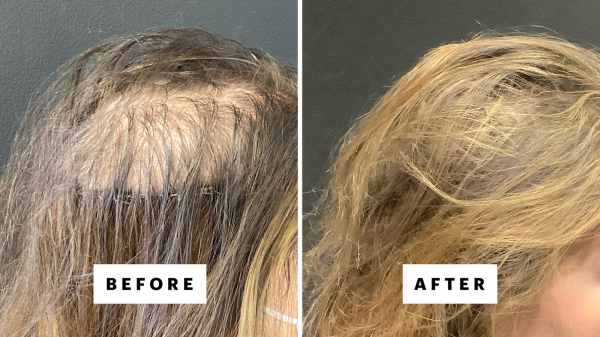
    Image may contain Adult Person Head Face Blonde and Hair

    A patient of Dr. Amelia Hausauer before and five years after starting oral minoxidil. This patient also did three monthly PRP treatments, with a maintenance session once every four months. (Full results were seen after 12 months and have been maintained with oral minoxidil and thrice yearly PRP.)

    Less common and more serious side effects are those of the cardiovascular variety. “There’s plenty of data showing that minoxidil does not impact your blood pressure when you’re at 2.5 mgs or below,” says Dr. Finney. “But every so often, someone will complain of heart palpitations, headaches, chest tightness, or lightheadedness, even at baby doses.” Mild fluid retention is another possible side effect and can manifest as puffiness in the face or swelling in the legs and ankles. Exceedingly rare at low doses, but important to watch for, is pericardial effusion, a dangerous buildup of fluid around the heart. Caught early, it can be treated with diuretics and other meds, but “it can be deadly if it goes unchecked,” Dr. Finney says. While none of the women I interviewed mentioned swelling or heart problems, some did feel dizzy or lightheaded when they first started on minoxidil. The symptoms were fleeting, resolving as they adjusted to the drug.

    Less of a side effect and more of a sticking point seems to be the forever nature of minoxidil, because, yes, if you stop taking it, it will stop working (meaning your follicles will return to their natural, unstimulated state). “After taking minoxidil consistently for a little over a year, I went on a three-week vacation and fell out of my routine,” says Polly. “At first, nothing happened. My hair looked the same for a couple of months. But then it gradually started to disappear, and I wound up back where I started.” After a year, Melissa tried to taper off the drug and “go into maintenance mode,” where she would take half a pill only three days a week instead of daily. It was “a total disaster," she says. She quickly saw her hair thinning and breaking. “I panicked and returned to taking minoxidil every day, bumping up the dose to 2.5 milligrams.” But backing off the pill doesn’t always spell trouble. Dr. Karp, who took oral minoxidil to counteract postpartum hair shedding, stopped after about a year, “because I felt like my results were good,” she says. “I wasn't sure what exactly would happen, but I haven't seen much shedding since.” That’s probably because postpartum shedding is a form of telogen effluvium, an abrupt and almost always temporary form of hair loss.

    Who’s a candidate for low-dose oral minoxidil?

    “This is a very interesting question, because it seems like everybody’s on it,” says Dr. Idriss. Indeed, for those of us seeing our parts widen and ponytails thin, oral minoxidil sounds like a welcome addition to the pill box. But who actually qualifies? Anyone looking to stimulate hair growth, who’s healthy enough to take the medication safely, says Dr. Idriss, especially people who can’t tolerate the minoxidil foam or know they won’t use it consistently. Poor candidates for oral minoxidil include people with heart conditions, blood pressure issues, a history of fluid retention, or kidney disease, as well as women who are pregnant or breastfeeding.

    Dr. Karp finds oral minoxidil to be particularly useful for peri- or postmenopausal women, who are looking to treat their hair loss with a nonhormonal option. A lot of people in this group are already taking hormones, either oral contraceptives or MHT, and they may elect to stay away from additional hormonal-type treatments, like the antiandrogens spironolactone and finasteride/dutasteride. Good candidates for oral minoxidil also have reasonable expectations, Dr. Karp adds, “and understand that this is a long-term commitment, not a quick fix.” As she explains, the first three months of treatment are more about stabilization than dramatic regrowth, with most patients noticing early improvement by six months and best results at a year-plus. After about three months, I’m firmly in the stabilization phase, and what a relief to see fewer hairs in the brush post-shower.
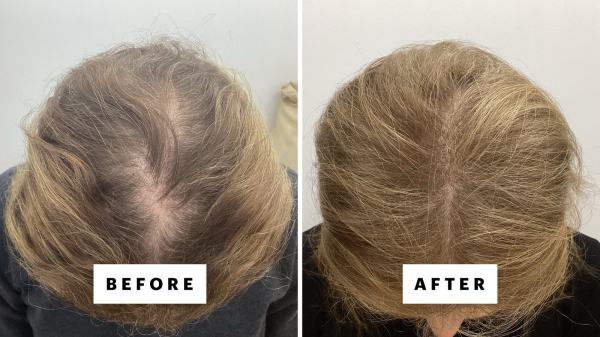
    Image may contain Adult Person Hair Head Face and Ponytail

    A patient of Dr. Robert Finney, before and 20 months after starting oral minoxidil and doing six ScalpStim treatments.

    In Dr. Gendler’s office, “minoxidil is always my first-line treatment for a woman with thinning hair that’s not related to a metabolic condition,” she says. She hesitates to prescribe the oral form to those with polyendocrine metabolic ovarian syndrome (PMOS), formerly called polycystic ovary syndrome (PCOS), because these women already struggle with face and body hair, and oral minoxidil can compound the problem. Topical minoxidil may be an option, but even that can cause hair growth on the face, she says. To address thinning hair in this group, Dr. Gendler usually leans on spironolactone. Dr. Agbai says she may use oral minoxidil to treat hair loss in women with PMOS (or those with signs of an androgen excess, in general), but she typically pairs it with spironolactone, finding “the combination is often more effective than either medication alone.” Since spironolactone has both antiandrogen and diuretic effects, it can also help mitigate minoxidil side effects, like excess hair growth and swelling in the face and legs.

    Is a new and improved minoxidil on the horizon?

    An extended-release version of oral minoxidil designed specifically for hair growth in men and women is currently in clinical trials. Allure first reported on the pill, known as VDPHL01, in fall 2025. Last spring, the drug manufacturer, Veradermics, announced the results of a randomized, double-blind, placebo-controlled trial involving 519 men with pattern hair loss. After six months of once- or twice-daily treatment, patients had, on average, 30 to 33 more hairs per square centimeter of scalp, with new growth observed as early as two months.

    “The trial not only showed robust efficacy (we’re getting 1.5 times the number of hairs that people would typically grow from other [currently available] therapies), it found the drug to be very safe and well-tolerated,” says board-certified dermatologist Maryanne Makredes Senna, MD, an assistant professor of dermatology at Harvard Medical School and a paid member of Veradermics’s scientific advisory board. There were no cardiac-related adverse events, she says, and the most commonly seen side effects were lower leg swelling and excess hair growth.

    The key to the extended-release formula is a “gel matrix designed to deliver a long-lasting, steady release of minoxidil for sustained absorption,” says board-certified dermatologist and Veradermics’s CEO Reid Waldman, MD. Since regular immediate-release minoxidil was made to swiftly lower blood pressure, it quickly peaks in the bloodstream before rapidly metabolizing and clearing from the body. This limits the time it has to interact with and stimulate hair follicles. With VDPHL01, the goal is to encourage more minoxidil to hang out at the hair follicles for a longer period of time, “while staying well below the blood concentrations that can lead to potentially scary side effects, like palpitations and blood-pressure changes,” says Dr. Senna.

    While the promise of a new hair loss treatment is exciting, some dermatologists question the need for a modified minoxidil, since the classic pill has a solid track record. But Dr. Senna contends that the doses currently used to treat hair loss aren’t always effective. “Many patients aren’t where they want to be efficacy-wise," she says, particularly those who’ve seen their results plateau, and doctors can’t push the dose without risking side effects.

    Dermatologists have also raised concerns about the potential for unwanted hair growth in women, since the doses used in Veradermics’s studies are higher than traditional doses. Even with an extended-release technology, “I can’t imagine a scenario where you’re able to deliver that much more of the medication, and do that much better on the scalp, if you’re not impacting hair all over,” Dr. Finney says. Only time will tell. Veradermics is actively recruiting for its phase three trial with female patients, and says that they expect topline results in the first half of 2027. Just this month, they released the results of a small study (not double-blind or placebo-controlled) on 28 women, which found improvements in nearly all participants, with signs of hair growth appearing as early as two months. No serious side effects or heart-related safety concerns were reported, and the company says hypertrichosis (unwanted hair growth) was “mild and manageable”—only one of the 28 women (or about 3.5%) dropped out of the study because of it. Dr. Senna says she’s eager to see where the data from the much larger female trial lands, but she doesn’t expect excess hair to be a deterrent, since medications like spironolactone can be given alongside minoxidil to reduce unwanted growth. (Although how much of a reduction varies. Polly, who is taking spironolactone alongside oral minoxidil, has still seen facial hair growth.)

    Pricing may pose another obstacle. “One of the big benefits of [traditional] minoxidil is that it’s cheap, like $10 a month, which is not true for any other hair therapy,” notes Dr. Hausauer. While Veradermics hasn’t shared anticipated pricing, some speculate that they’ll have to charge a premium in order to recoup the costs of the FDA trials.

    Hypotheticals aside, we can’t overlook the fact that VDPHL01 is poised to be the first FDA-approved oral treatment for female pattern hair loss, and, if approved, says Dr. Agbai, “it could represent a meaningful milestone for women.”

    As for me, I’ve been dutifully taking half a pill of standard minoxidil each night for about three months. The biggest change I’ve seen so far hasn’t been gobs of hair growing in but rather fewer strands falling out, which is a win in itself. Still, I’m excited for the “mushroom-head” phase. I do sometimes wonder how much thicker my hair might be today had I jumped on oral minoxidil sooner, before it went mainstream. For now, though, I’m happy to have adopted this routine—to finally feel in control of an issue that’s been plaguing me for years. While I don’t consider myself a minoxidil proselytizer (as an old-school journalist, I was taught not to gush), I suppose this story is sort of like me shouting from the rooftops, in a not-at-all-breathless way, “Hey, this stuff works! And it’s cheap!” To me, oral minoxidil is a no-brainer for hair loss. If only all our midlife worries could be solved so easily.
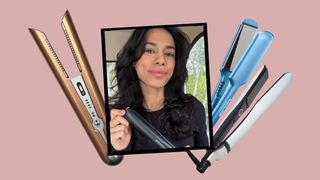
    *Name has been changed for privacy.

    FREQUENTLY ASKED QUESTIONS

    What is oral minoxidil?

    It’s a prescription blood pressure medication that’s commonly used off-label, at low doses (under 2.5 mgs for women, less than 5.0 mgs for men), to treat all kinds of hair loss.

    How does it treat hair loss in women?

    It stimulates hair growth by boosting blood flow to the hair follicles. It’s also thought to keep hairs in the active growth phase for longer, to enlarge miniaturized follicles, and to increase the production of follicle-based growth factors.

    What are the most common side effects?

    Unwanted hair growth on the face and body is the most common side effect. Some people also experience what’s known as “dread shed,” a temporary period of pronounced shedding weeks after starting the drug. Headaches, lightheadedness, and ankle swelling are possible, but occur less frequently at the low doses taken for hair loss.

    Is there anyone who can’t take it?

    Oral minoxidil is contraindicated in women who are pregnant or breastfeeding. People with heart conditions, blood pressure issues, a history of fluid retention, or kidney disease are not good candidates and should talk to their doctors before taking it.
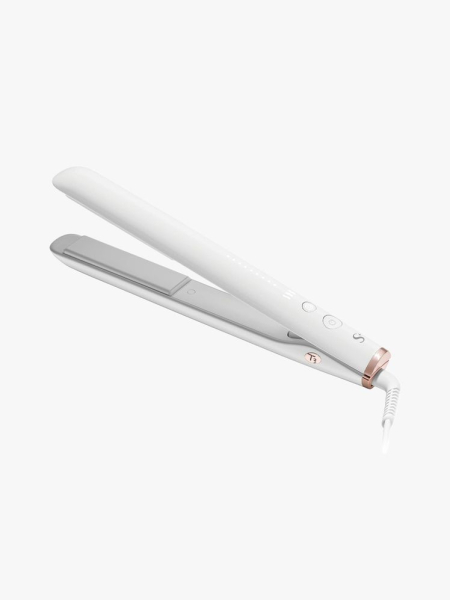
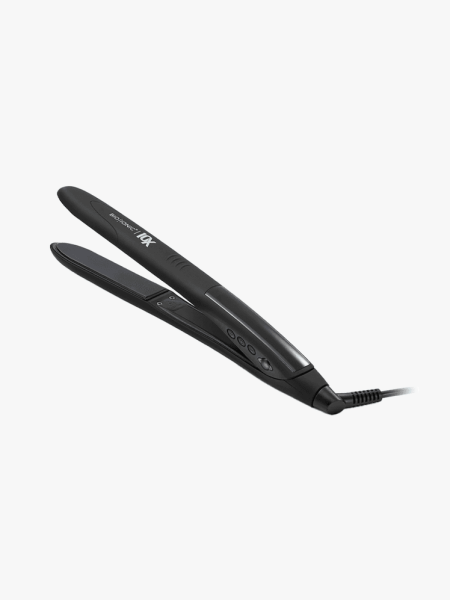
    Where can you get it?

    You’ll need to get a prescription from your doctor (be it a dermatologist, obgyn, or PCP) or a telehealth provider, like a nurse practitioner, with prescribing privileges.

    How much does it cost?

    Generic oral minoxidil can cost as little as $10 out-of-pocket for a month’s supply (which can be stretched to two months if you’re taking half a pill daily). Branded (like Loniten) or compounded forms (which might add vitamins or a DHT blocker to the oral minoxidil and are often sold by telehealth sites) tend to cost more. But remember that compounded drugs aren’t approved by the FDA for safety and effectiveness, and if there’s a safe, effective, and cheaper FDA-approved generic option, the choice seems clear.